Take the money and run
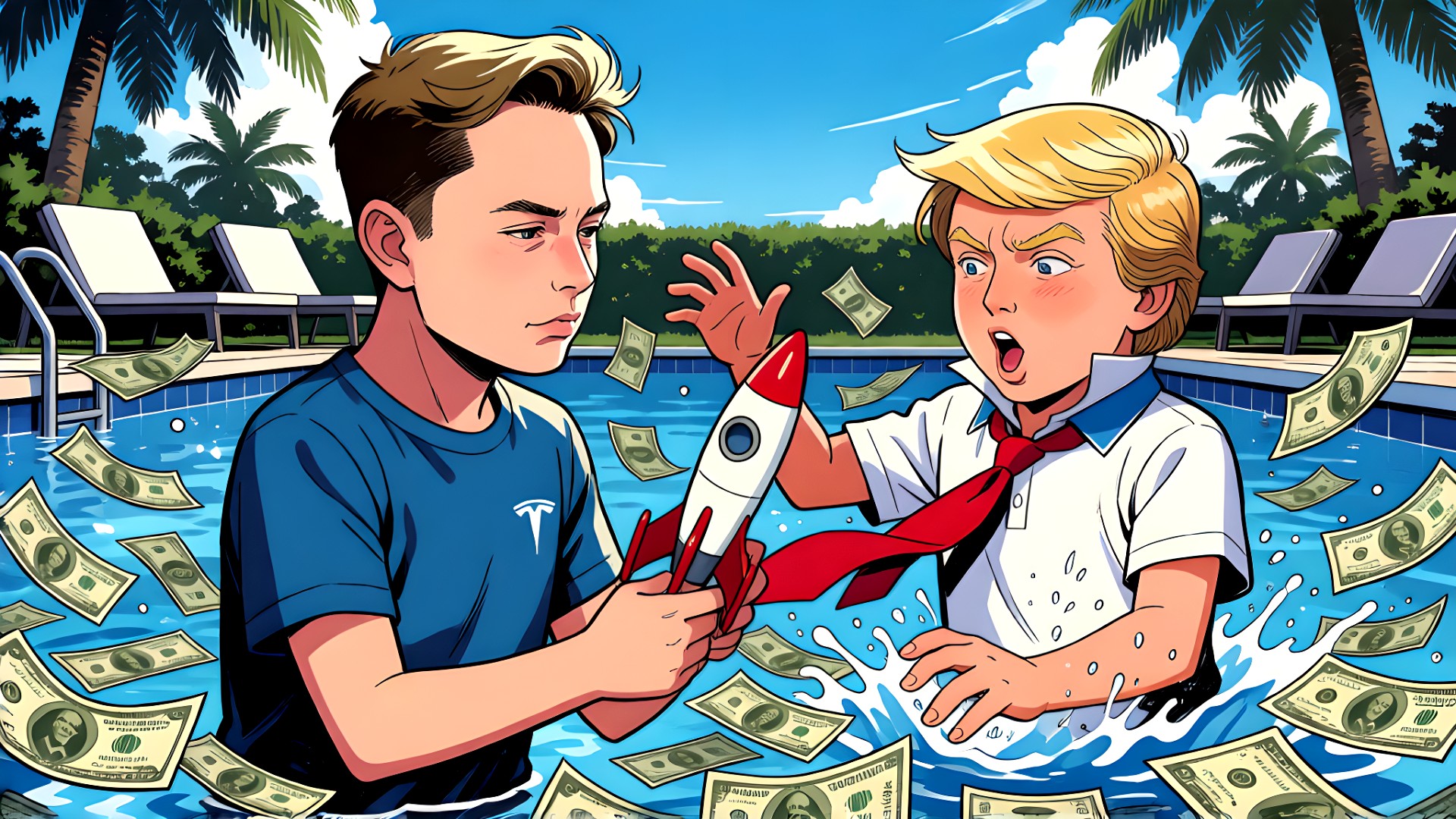
There's a scene that repeats itself over and over again, only the names of the actors and the number of zeros change. First the party, then the hangover, finally the huge bill paid by those who weren't even sitting at the table. SpaceX he just staged this parable with almost didactic precision, and it's hard to stop watching it: horrible, but impossible to take your eyes off.
The biggest debut in history
Let's start with the numbers, because here the numbers hurt more than any adjective. June 12, 2026 SpaceX hits Wall Street with its IPO (Initial Public Offering, ed.) biggest ever: price set at $135 per share, for a monster collection of over 85 billion dollars. The stock opened the day with a jump of 19.34%, bringing its market capitalization above $2 trillion in a single day.
It didn't end there. In the following days, the euphoria turned into collective delirium: the stock reached an intraday high of over 225 dollars, with a capitalization that touched the 2.950 billion, even surpassing Microsoft for a few hours and knocking Amazon off the podium of the most valuable companies in the world.
We're talking about a company that—it should be remembered—still generates significant losses, fueled by the recent billion-dollar acquisitions of X and xAI. When the protagonist is called Elon Musk, however, the balances become details: the hypnotic admiration for the character did the rest.
Then, as expected, the crash
And here's the part that no one talks about with the same enthusiasm as the launch. July 15th The stock fell for the first time below its IPO price, the famous $135. From there, the decline never stopped: on July 23, the shares were worth around 111-118 dollars, a collapse of almost 48% from the June peak, with over 1,000 billion dollars of capitalization evaporated in just over a month.
Even Musk's personal stake, on paper, went from $1.2 trillion to $780 billion. Four hundred billion disappeared in a click, while he probably continued tweeting about his rockets as if nothing had happened.
There are those who downplay the issue, claiming it is a simple technical problem: very low initial float, Forced purchases by index funds that were supposed to include the stock in the Nasdaq-100, therefore a physiological reorganization rather than a judgment on the company's actual business. This may be true. However, one fact remains: while analysts argue about the causes, millions of small savers entered precisely in those days of madness, buying at the highest prices in the hope of riding the next Musk. And now they find themselves with their portfolios cut by half.
The real twist comes in August
Here lies the passage that makes the whole affair even more cynical than it seems, and which few have truly understood. After the publication of the first quarterly report, scheduled for August 4th, will expire on lock-up which today blocks the sale of shares owned by employees and early investors. Since then, shares with an estimated value of over 100 billion dollars they can be poured into the market.
The one person who won't be able to sell right away is Musk himself: his personal lockup is set for 366 days, meaning he'll be "trapped" with his shares for a whole year. This doesn't make him a victim at all: it just means that the real winner will be the long-time employees and venture capitalists who entered in previous rounds. That is, those who were lucky enough (or had the right information) to get in before the general public discovered the name SpaceX on a trading app.
The small investor always arrives last to the party and first to the bill.
Trump and the post worth billions
And if SpaceX seemed like an isolated case, here's a piece that perfectly completes the picture. From August 2026 Trump Media & Technology Group will launch a service, called Truth Api, which will sell banks and investment funds “early access”—just milliseconds before the public—to posts from ten select accounts on Truth Social, including that of President Trump himself.
It's worth pausing for a moment to think about what this really means. The president of the United States, aware of how his words could swing the markets by tens of billions of dollars, decides to directly monetize that ability, selling the privilege of reacting before anyone else to those who can pay. The conflict of interest is clear: the family Trump Check out the 41% of the company that manages this service. We've gone far beyond insider trading carried out in the shadows: this is Insider trading with premium subscription, issued with regular invoice.
How We Got Here (And Why We Like It That Way)
And here we come to the real question, the one that stings more than all the numbers: why do we continue to grant this power to people like Musk or Trump, and why do we do it with a smile, almost with gratitude?
The uncomfortable answer is that they don't just deceive us: we ask permission to be deceived. We build an almost mystical aura around these figures, treating them like oracles capable of predicting the future, and then we're surprised when they use that trust to drain our pockets in perfectly legal ways.
It's the same psychological mechanism as collective screen addiction: we continue to label children under 16 as "immature," while adults remain glued to their feeds, unable to detach themselves even when they know it's harmful. It's the same with finance: we know perfectly well the nature of the system, structured to reward those already in and punish those who arrive late, yet we continue to play, hoping to be the smartest one in the room for once.
There was a story of mine, Ether, which already spoke about this: the story of a man who, with a single gesture, could shut down the world. The underlying problem lies entirely within us: we've handed them that boundless power on a silver platter, one smartphone and one like at a time. SpaceX and Truth Api represent the financial version of that same nightmare: they're taking exactly what we're offering them, convinced that this time we'll be the ones to win.
How disgusting, one might say. And one could add: what a beautiful piece of junk, perfectly put together, which will continue to be bought until someone stops selling it — which is, probably, never.
Modern narrative finance replaces traditional balance sheet fundamentals with the media impact of charismatic characters. Through the gamification of trading and the FOMO (fear of being excluded), small savers buy shares at the height of the increases, suffering devaluations when the insider and the first investors cash in on the expiry of the bonds lock-up.

Digital creative, musician, and storyteller. I explore the intersection of humanity and technology, telling stories of AI, music, and real life. Welcome to my organized mess.”