The Parable of the Potato Peeler (or How I Risked Excommunication for Horizontal Heresy)
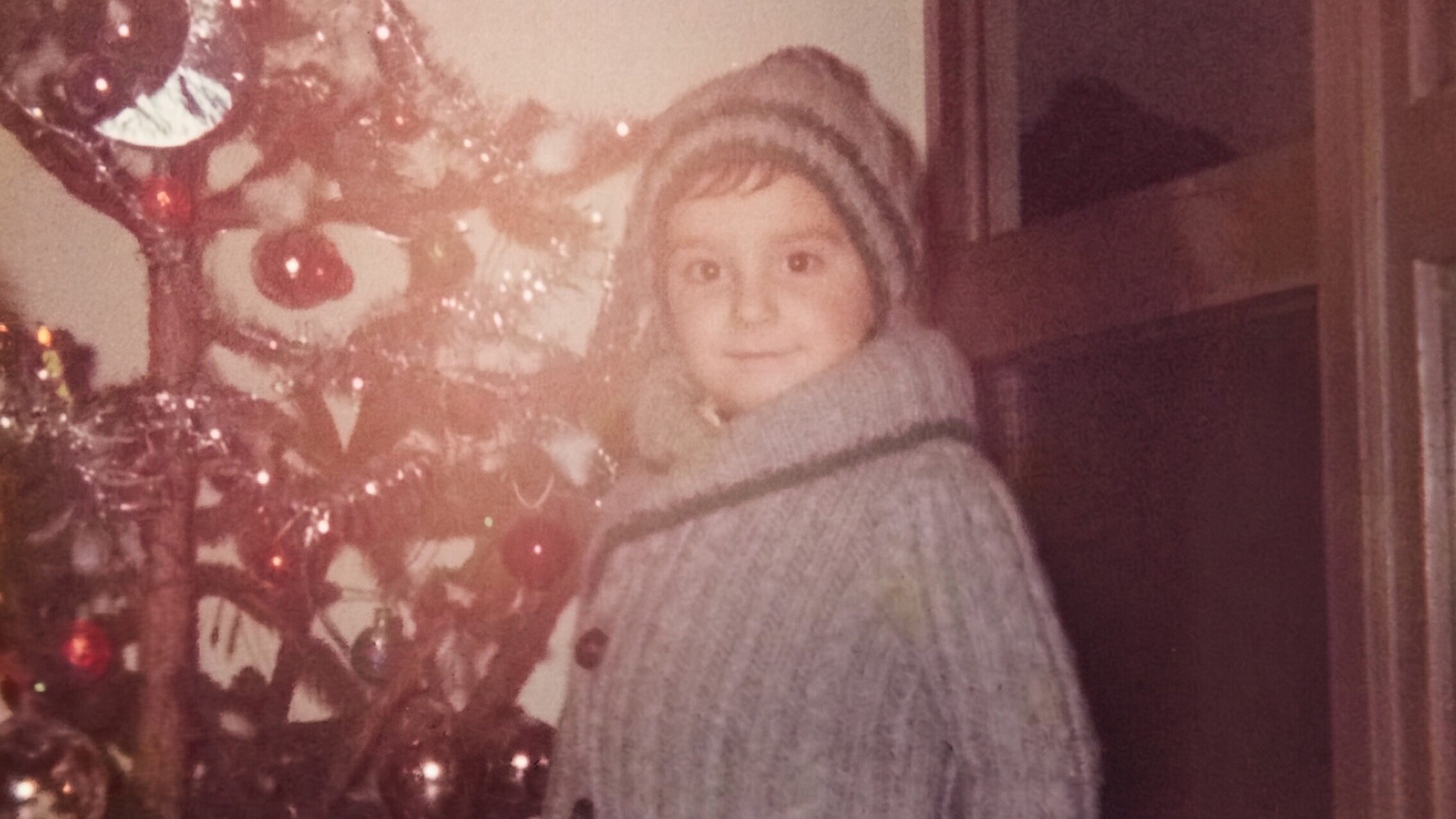
I must have been seven, maybe eight years old. It was midday on an ordinary Sunday, one of those that in the 80s smelled of barley coffee and Sports Sunday at full blast. As usual, lunch ended with the fruit ritual: a few apples in the center of the table and my mother, with painstaking patience, peeled segments for everyone.
Then, like a bolt from the blue, between a glass of water and the wait for my slice, the sentence arrived! My father, putting on the air of a supreme court judge, pronounced the verdict:
“"It's time you learned to peel your own apples. It's so convenient to always have food ready!"”
A dramatic turn of events. I immediately thought of a test of maturity worthy of the initiation rites of the indigenous tribes of the Amazon, the ones my great friend Piero Angela solemnly told me about on TV.
My mother immediately tried to lay out a safety net: “Look how I do it”. The intention was noble, but the theory was crystal clear to me after years of passive observation. The insurmountable problem was practice.
I grabbed a table knife—fortunately, it was blunt, reducing the chances of ending up in the emergency room to zero—and selected the victim from the basket. The smallest and most defenseless.
- Cut the apple in half: operation successful. ✅
- Cut it into four quarters: I've overcome this obstacle too. ✅
- First attack on the peel: too superficial incision, slipped into the void. ⛔
- Second attack: tac! Slice broken in two. ⛔
I concentrated.
Every millimeter of peel I managed to remove carried with it entire centimeters of edible pulp. The more precise I tried, the more I transformed a delicious fruit into a battered, unrecognizable core.
Around me, the audience reacted according to their nature:
- My father watched the scene with his classic frowning look.
- My mom was staring at me with a mixture of torment and maternal compassion.
- My two-year-old sister found the show hilarious and laughed like crazy, holding out her little hands as if to say “Come here and I'll take care of it”.
- My grandmother had obviously started a silent novena under the tablecloth.
Having destroyed the first quarter and reduced the second to pulp, I stopped.
The Epiphany
At that precise moment, what is shown in Hollywood films and in Four Restaurants happened: time freezes, while vector patterns, mathematical formulas and colored lights begin to float around the protagonist. And for a moment I felt like Gene Wilder in Young Frankenstein: “Yes… it… can… be done!”.
I stood up silently, walked to the cutlery drawer and pulled out an object forgotten by the theorists of classical peeling: the potato peeler.
I returned to my seat and, with the coolness of a surgeon, began the operation. The blade glided like a charm. The peel came off in a continuous, millimeter-perfect ribbon, without wasting a single gram of pulp. In less than a minute, I had before me two perfectly peeled apple quarters, perfect, ready to be enjoyed. Potato peelers to perfection.
I looked up showing off a 74-tooth smile, proud of having solved a complex engineering problem with a stroke of genius.
The reception, however, was frosty.
- My mother looked at me, somewhere between shocked and disoriented.
- My sister was crying because I interrupted what she thought was a fun game.
- My grandmother was staring at me as if I had just summoned a demonic entity, clutching her rosary tightly in her hands.
- My father remained in deathly silence for an infinitely long time, while my lower lip began to tremble.
Then came the father's verdict:
“Remember that in life, shortcuts don't pay. You have to learn to do things the right way!”
“As God commands!”, my grandmother concluded, raising her hand to show the rosary.
From the home table to horizontal skills
More than forty years later, I often think back to that lunch and that massacred apple. At that moment, around the table at home, an epochal cultural clash between two worldviews took place.
My father and grandmother were the caretakers of a’strictly vertical orthodoxy (I-Shaped): in their vision, for every problem there is only one and exclusive canonical way - the apple is peeled with a fruit knife, the potato is peeled with a potato peeler - and if in the process you ruin the pulp or peel a finger, never mind: it's part of the price to pay for learning the discipline.
My gesture at seven years old was instead the very first and embryonic manifestation of what today we call lateral thinking e contamination of horizontal skills. Instead of fixating on orthodox knife technique, I went straight for the’final goal: the intact apple. Rather than interpreting deviation from the rules as a lazy shortcut, I saw it as a logical optimization. And I wasn't willing to accept wasting resources just to comply with the rules: I preferred to preserve them through the hybridization of tools.
Without knowing it, I applied the principle of cross-domain problem solving: I took a tool native to a specific context—tubers—and transferred it to a seemingly unrelated field—fruit—to solve a process inefficiency.
Today the world of work is finally understanding what seemed very clear to me already in 1980. Strictly vertical skills are indispensable for purely executive tasks, but they risk showing their weaknesses when faced with unexpected events or dynamic contexts. On the contrary, those who have a broad perspective - those who cultivate varied interests, those who frequent different worlds and know how to connect apparently distant disciplines - bring with them a drawer full of “potato peeler”: tools borrowed from other sectors that allow us to solve complex problems where traditional techniques alone continue to leave too much of the essence unresolved.
What my father called a “slacker’s shortcut” was actually an early demonstration of efficiency and big-picture thinking.
If I could travel back in time to that lunch forty-five years ago, I would reassure my grandmother of my soul's salvation. And to my father, I would say with a hint of pride: “"Don't worry, Dad: the knife is perfect for someone with your experience. I'm just using a little ingenuity to avoid wasting pulp while I learn."’

Digital creative, musician, and storyteller. I explore the intersection of humanity and technology, telling stories of AI, music, and real life. Welcome to my organized mess.”