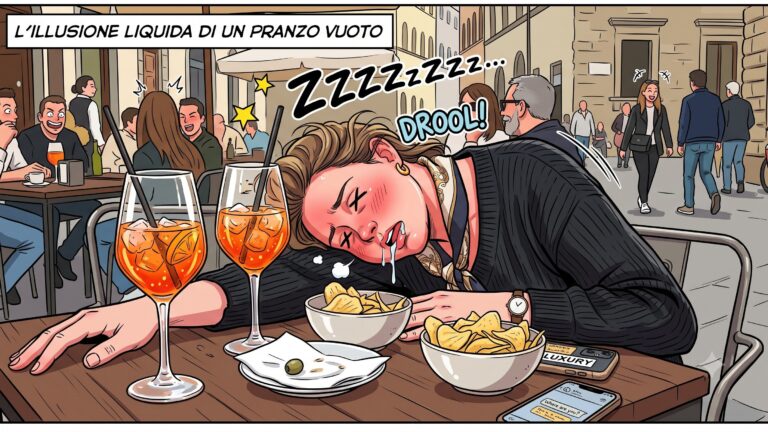

The illusion of being the Amazon of the moment (or: the suicidal strategy of predatory pricing)
There's a ghost that haunts the corridors of commercial companies, from multinational silicon companies to small local businesses. It's the ghost of “I'll do it like Amazon”.
It works like this: take a market, enter with force, and destroy the price lists. You lower prices below production costs, slash margins until you're bleeding yourself dry, and implement a seemingly suicidal trade policy—right now, at a time when raw material and logistics costs are spiraling out of control.
Crazy? Desperate? No, or at least not only. Often it is a precise and cynical strategy based on predatory pricing.
The goal is elementary in its brutality: operate at a loss for a calculated period, tolerate the deficit, and wait for the competition—the healthy kind, trying to survive on real margins—to die of suffocation. Once the surrounding market has been created, prices can be raised at will, strengthened by a de facto monopoly.
How Jeff Kills the Competition in Diapers)
If you think that mine is just anti-capitalist paranoia or keyboard cynicism, go and reread the textbook case of Diapers.com in 2009. It was a healthy company, specializing in baby products, that was growing thanks to excellent service. Jeff Bezos decided to buy it, but the founders said, "No thanks, we want to stay independent.".
Amazon's response was a nuclear strike at a low cost.
Using its algorithms, Amazon slashed diaper prices on its platform, chasing and undercutting every single offer on Diapers.com. Amazon ended up losing $100 million in just three months in that department, a programmed bleeding which for a colossus is a pinch, but for a vertical reality is total apnea.
When Diapers.com investors saw their lifeline running out, they threw in the towel and sold the company to Amazon. The outcome? Once they had absorbed the customers and databases, Amazon permanently closed the site in 2017, declaring that “it wasn't generating enough profits”. They burned millions to make the desert, swallowed up the prey and then threw it in the garbage.
Investors' Hangover and the Fake Value Trap
The paradox of this perverse mechanism is that it isn't punished by the market. On the contrary, it attracts capital.
We live in a strange financial age, where investors often don't look for profitable or solid companies, but they bet on future speculation. They drool at the thought of tomorrow's billion-dollar profits and are willing to inject rivers of money into empty boxes that they burn the cash register every day, without expecting a short-term return. It happened with Uber for years, with WeWork, and it happens every day in our backyard. I see it every day in my work.
But this isn't business strategy: it's gambling with other people's money.
The house of cards collapses far more often than financial pundits care to admit. Thousands of companies run out of funding and are forced to close. The problem is that when these businesses collapse, they don't just leave blank Excel spreadsheets on the table: they leave real rubble—unpaid suppliers, families without wages, and completely devastated local markets.
The Italian paradise of serial failures
And here we come to the most cynical point, the one that hurts the most because we see it happening every day before our eyes. In Italy, the regulatory constraints to stop these debt magicians are scandalously flexible.
Italian bureaucracy—so ferocious with the craftsman who delays payment for a form by a day—is suddenly distracted when faced with the professionals of the budget deficit.
Thanks to the magical game of blockheads, of LLCs opened and closed to the rhythm of waltzes and of rigged liquidations, the script almost always repeats itself in the same way:
- They open company A, burn the earth with impossible prices and accumulate millions in debt.
- They declare bankruptcy, leaving their suppliers with nothing.
- The next day you find them behind a new desk, with Company B, a clean record and the same exact cheek — ready to start over as if nothing had happened.
It's the legalization of unfair competition. Those who work hard, who pay taxes, and who respect the supply chain are penalized; those who cheat with numbers and use predatory pricing as a weapon receive impunity in return.
How to defuse budget conjurers
There's no reason to be optimistic. This system will continue to thrive as long as we measure a company's value solely by its growth rate and not by its ethical and structural stability.
The “lowest price” It's almost never a productivity miracle: it's almost always a symptom that someone, somewhere in the supply chain, is footing the bill for you.
Fortunately, in most companies, things work differently. Materials don't lie, costs are real, and reliability is measured by durability—not corporate sleight of hand.
Let the sharks continue to eat each other in the Matrix of fake budgets. We'll continue to walk on foot, in comfortable shoes and with a straight spine. And when you buy something "at the lowest price on the web," remember the diapers!
“I seek beauty everywhere. And if I don't find it, I create it.”
(And if I find a cheater, I'll disarm him.)

Digital creative, musician, and storyteller. I explore the intersection of humanity and technology, telling stories of AI, music, and real life. Welcome to my organized mess.”