
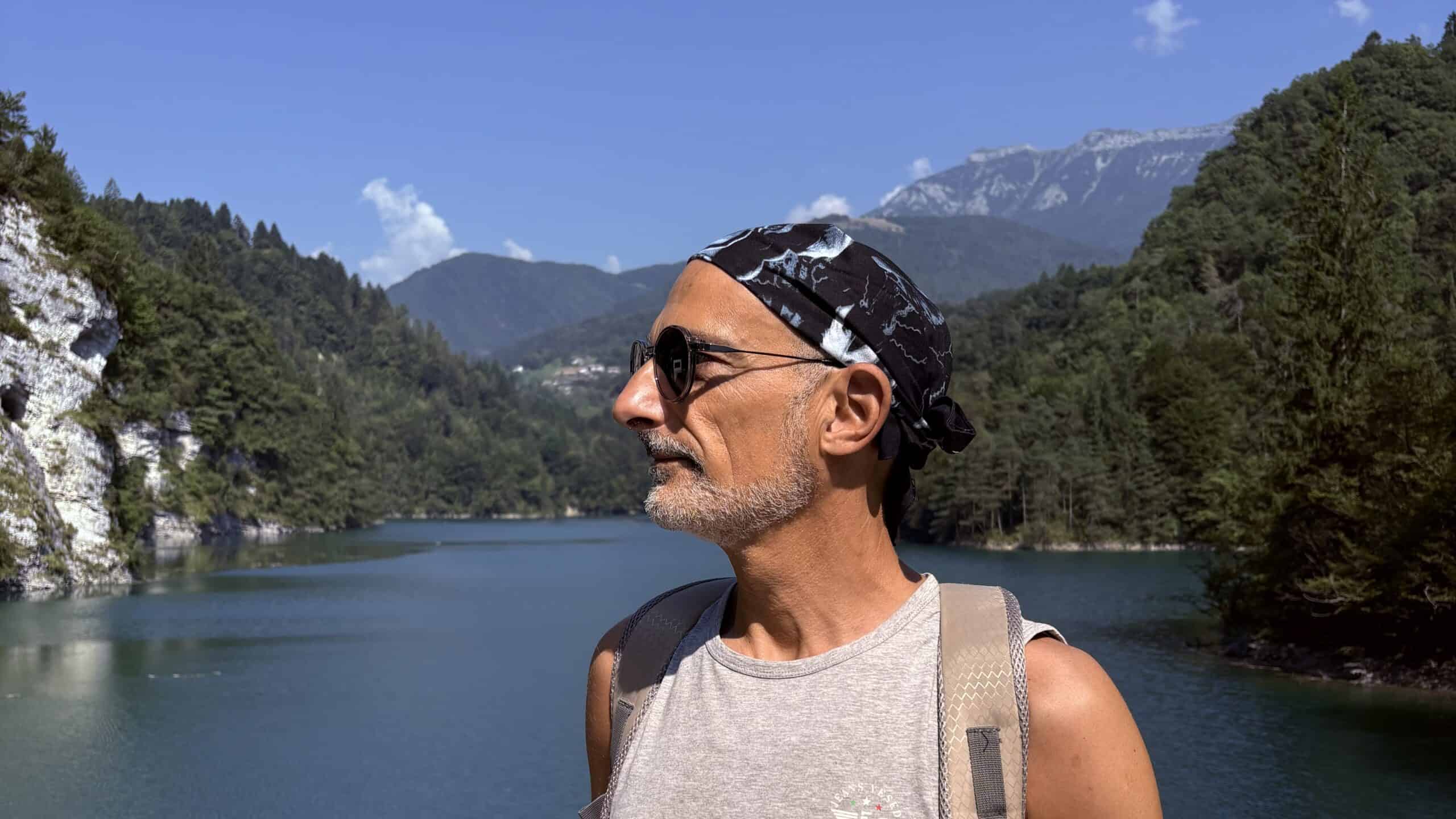
Remember that you must die. You will be happier.
I don't know where to start, so I'll start with a fact: I think about death often.
I think about it with curiosity. How do you think about something that exists, that will exist, and that he is kind enough to remind me that the time I have now is worth something.
Some might say it's unhealthy. I think it's one of the healthiest mental actions you can take.
Where does this stuff come from?
At some point in my life, I stopped waiting for things to go well to feel good.
It was a slow, arduous, and sometimes frustrating realization: that the way I reacted to things was much more up to me than I'd thought. And that if it was up to me, I could work on it.
For years, I functioned according to a precise logic: first I solve the problems, then I'll be fine. I waited for the worry to disappear, for the situation to settle down, for the right moment to arrive. The right moment never came—or it did, and in the meantime, another one had already arisen.
At a certain point, I turned things around. If I'm feeling good—even just a little, even in the midst of chaos—I have more clarity, more energy, more patience. And with clarity, energy, and patience, I can tackle problems better. It sounds trite when you put it that way. But get it out of your head that happiness is the final prize and not the starting point everything changes.
The brain is inside the body; it's flesh like everything else. It wears out, repairs itself, changes shape. Move, sleep, nourish it well, and it gives you something back. Treat it like an optional extra, and sooner or later it'll send you the bill. As simple as breathing.
The thought that changed me the most
There's a mental exercise I've been doing for a while. I imagine receiving bad news. Health, work, something that really matters. I seriously imagine it—as a test: would I be able to cope?
At first, it seemed like a sad thing to do. Then I realized it was exactly the opposite. Mentally preparing for the worst means not being caught off guard. It's like training for a race you hope to never have to run.
I Stoic philosophers —Marcus Aurelius, Epictetus, people who had their own problems, and quite a few of them—did it systematically. They called it memento mori. To wake up. To stop wasting energy on things that don't matter.
It works. It works for me.
Real life
There's that whole part of real life that never makes it into elegant conversation. The days when you find yourself crushed between requests, emergencies, unexpected events, people with good intentions but little practice, and problems that all come at once as if they'd agreed upon something. At certain moments, you feel like you're constantly between a rock and a hard place, and the risk is that of reacting instinctively, of letting nerves take over. That's when you realize whether your head can handle it or not. Not to become perfect, just so you don't get swept away by everything else.
Calm doesn't come alone
If you've never trained it, when the storm hits you're left with nothing. It's like trying to run fast without ever training your legs.
Breathing—really breathing, slowly, from your belly—does something physical to your nervous system. It's pure anatomy. You send a clear signal to your body: you can relax, you're not dying. But you need to do it often, not just when you're already panicking.
The same goes for writing. Keeping a journal, even in the form of a blog—and I say this as someone who's always found it a bit embarrassing—brings order to that voice in your head that becomes noise at night. Write down what went well. Write down where you want to go, as if you were already there. The brain is extraordinarily gullible about this: If you tell him a story often enough, he starts acting accordingly.
But then you become a robot?
There's something I often hear when people talk about controlling their thoughts, about training themselves to stay calm, about not letting their emotions overwhelm them.
“But then you lose your humanity. You become cold. You stop feeling.”
I understand where you're coming from. It seems that mastering yourself means turning something off. Giving up passion, spontaneity, that chaotic part that makes you feel alive.
It's the exact opposite.
Anyone who has never worked on their thoughts isn't free—they're more at the mercy of something. Unfiltered emotions aren't authenticity, they're noise. They make you say things you don't mean, make decisions you don't want, react in ways you regret.
Learning to observe what you feel before letting it dominate you doesn't mean not feeling. It means choosing what to do with what you feel. And that choice—that small, incredibly difficult choice—is perhaps the most human thing there is.
Everything I have today will not always be there
There is a side effect of this way of thinking that I didn't expect.
Knowing that what I have today—the people, the moments, the health, the lightheartedness of certain mornings—won't last forever changes the way I choose to be in the world. It makes me want to love rather than hate. To do good rather than destroy. To stand in the light rather than let something inside me slip into the darkness.
It's not do-goodism. It's calculation. If time is limited, wasting it on resentment, malice, or petty daily wars is simply stupid.
I often think about it when I look at those who have power. bullies who rule the world, those who build their greatness on the backs of others — they too will die. Their time will run out, too. I wonder if they ever think about it.
The one thing you can't miss
When faced with something you can't change—and there are things you can't change, no point making a fuss about it—the last freedom you have is choosing how to interpret it.
There are things you can do about. There are things you simply have to accept. Wisdom lies in knowing how to distinguish one from the other without wasting hours banging your head against the wrong wall.
Why I write this
I haven't found the magic formula. It took me years to understand that waiting to feel good to live well is the most common trap there is.
If I can do it, as a normal person with my bad days and my moments of panic, anyone can probably do it.
Start small. Pause for a second. Breathe deeply.
And think about death every now and then — it won't hurt you, I promise.
I recommend you read: THE LONGEVITY MINDSET’ Dr. Ongaro has put down on paper, and in a scientific manner, the thoughts that I have been carrying with me for years.

Digital creative, musician, and storyteller. I explore the intersection of humanity and technology, telling stories of AI, music, and real life. Welcome to my organized mess.”


One Comment