You want a schism? Make it complete. Otherwise, it just smells musty.
On July 1, 2026, the Society of Saint Pius X consecrated four new bishops in Ecône, Switzerland, ignoring the final appeal of Pope Leo XIV and incurring the automatic excommunication provided by canon law for schismatic acts. Pascal Schreiber, Michael Goldade, and two other prelates trained in the same Lefebvrian tradition took the oath before approximately 20,000 faithful from around the world. It's strange to think that, within an organization often accused of being out of touch with the world, there exists an even more archaic branch, incapable of breaking free from a past that simply no longer exists, except in their own minds.
An excommunication announced
This story repeats itself like an old scratched vinyl record. In 1988 Marcel Lefebvre he did exactly the same thing, consecrating four bishops without papal mandate and receiving excommunication latae sententiae, later revoked by Benedict XVI in 2009 as a gesture of détente that never truly paid off. Thirty-eight years later, Lefebvre's heirs screened the same film, with the same script and the same pre-written ending: rejection of the Roman Primacy, schismatic act, excommunication confirmed by the Holy See with a note that once again cites John Paul II's words from 1988. It almost seems as if the only true tradition the Lefebvrians have managed to preserve intact is precisely this: the art of breaking.
A small political detail
Here comes the detail that makes everything clearer, and decidedly more uncomfortable. Among the twenty thousand faithful who flocked to Ecône were also many representatives of the’'European far right; a fact confirmed by the news, far from any free interpretation. Monsignor Bruno Forte He stated bluntly that behind this schism lies a profoundly political motivation, far beyond theological questions. The comparison with fascism is no longer a rhetorical provocation: it is a parallel drawn by the facts themselves.
The Lefebvrists and certain nostalgics of the twenty-year period share the same emotional grammar: an obsession with a "pure" hierarchical order, a nostalgia for unquestionable authority, a pathological fear of a world changing too quickly for those who demand immobility. Every now and then they return, make noise, pose for the ritual photo, and then retreat into the shadows where they feel safe. The difference is that one of these two monsters, at least on paper, has already been archived by history as a an infection that should not be repeated.
But there's a little worry that's bothering me…
He whispers with all due caution. There's no evidence, just a deafening coincidence in timing. Pope Leo XIV has, for months, been Donald Trump's most inconvenient pontiff. The clash began in the spring of 2026 over issues related to Iran, war, and diplomacy, with Trump publicly calling the Pope "weak" and dangerous to American Catholics. Tensions reached the point that the US administration summoned the apostolic nuncio to Washington for "clarification," while the Pope responded with an almost embarrassing coldness, declaring himself completely uninterested in responding.
Let me be clear: I'm not saying the White House has armed Ecône. What I am saying is that for anyone needing to weaken an inconvenient Pope, at this precise moment in history, a fragment of the Church that breaks away on its own and makes the news is very convenient. I'm talking about a suspicion declared aloud, an intuition that travels between the lines. Coincidences, when they accumulate, begin to resemble a pattern too much to be ignored.
If you want tradition, look for the real one
Here's the point none of the traditionalists seem to want to address: their tradition resembles an arbitrary selection rather than a genuine return to the origins. If you really want to go back, let's go back seriously, without convenient shortcuts.
- Priests should get married. Mandatory celibacy in the Latin Church is a discipline consolidated in the Middle Ages, formalized in 1193 in part to prevent ecclesiastical assets from being inherited by the children of clerics. An administrative rule disguised as eternity.
- Let the Mass return to Greek, not Latin. Latin became the liturgical language precisely because it was the "vulgar" language, that of the common people of the time. If the goal is the most ancient origin, consistency leads to the Greek of the earliest Christian communities, not the Latin of imperial Rome.
- The liturgy should stop pretending to be immutable. The Roman Rite has changed many times over the centuries, adapting, evolving, and breathing with time. Those who describe it as a block of marble falling from the sky are telling a tale, not history. A liturgy truly faithful to its origins is simple, communal, and expressed in a language understood by those present.
- Authority must always be respected, not just when it is convenient. Consecrating bishops without a pontifical mandate means breaking the very principle of communion that traditionalism claims to protect. It's like setting fire to a house to save the roof.
Mold is not custody
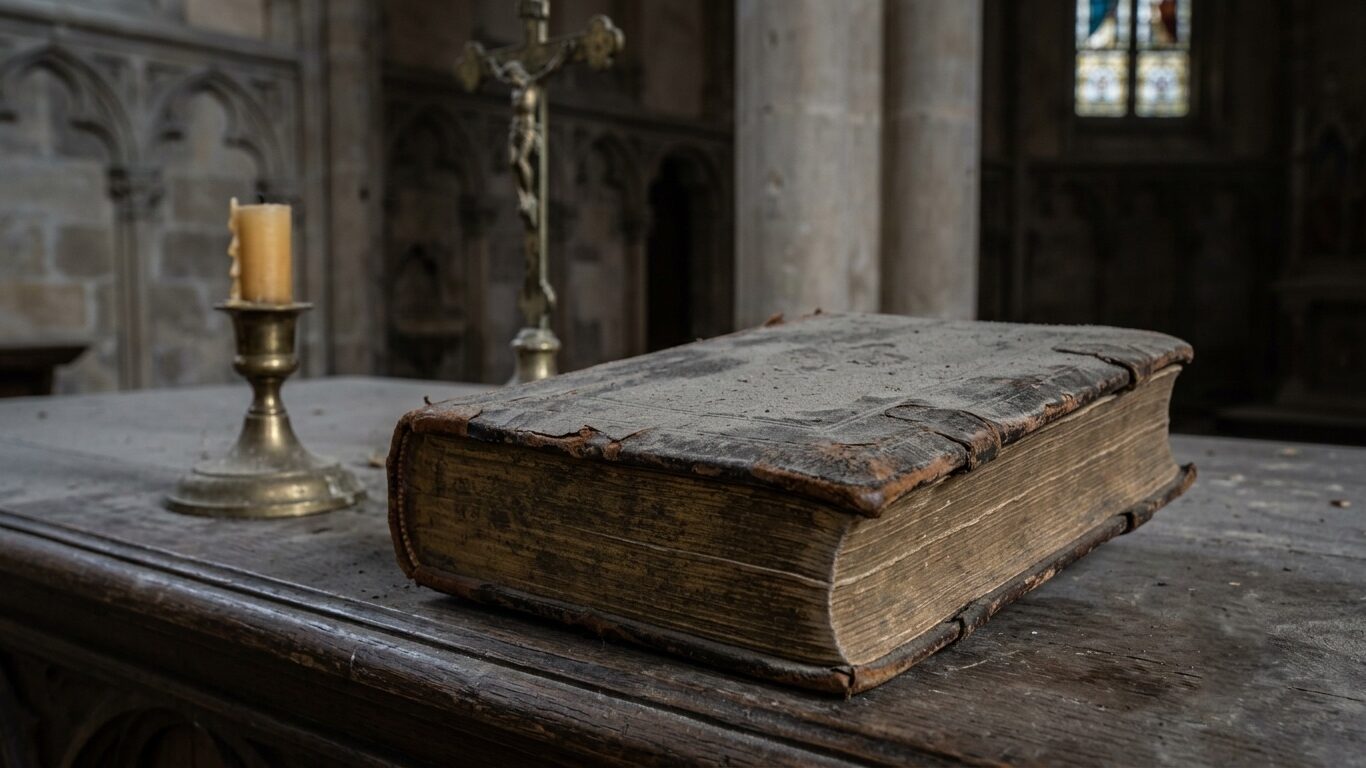
Anyone who calls a set of arbitrarily chosen rules, held together only by the fear of change, "tradition" is safeguarding nothing: they are simply allowing an idea to fester that, if left alive, could still have had something to say. Being faithful to the past means understanding what from that time still deserves to breathe in the present, rather than retreating into a glass case. The Lefebvrians didn't choose tradition: they chose the comfort of a closed identity, passing it off as faith.

Digital creative, musician, and storyteller. I explore the intersection of humanity and technology, telling stories of AI, music, and real life. Welcome to my organized mess.”