The shed that fooled London: the review scam
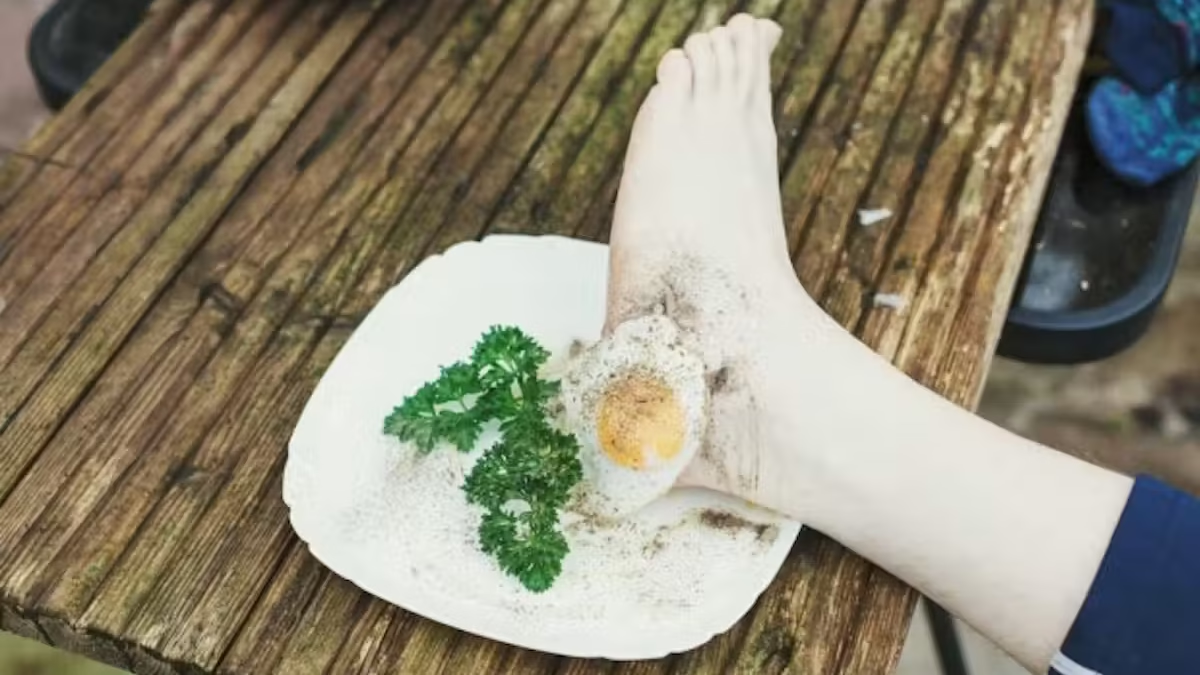
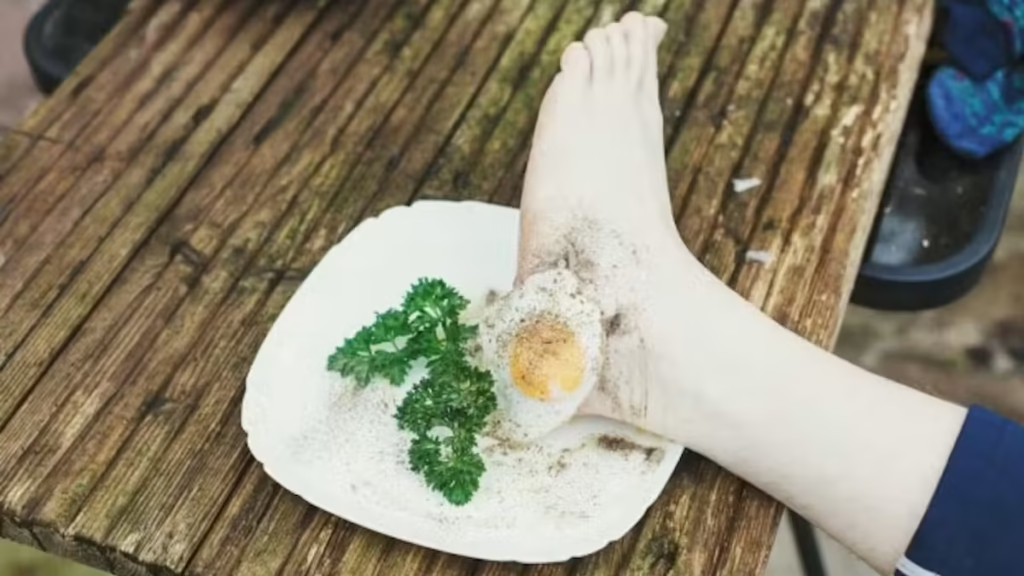
A foot. Bare, sweaty, resting on a plate like a fine steak. Someone photographed it for the non-existent restaurant The Shed at Dulwich, he called it “refined dish based on eggs and meat”, and hundreds of people tried to book a table to taste it.
It's not satire, it's not a nightmare: it really happened, in London, in 2017. And if you're choosing a restaurant or hotel this summer based on TripAdvisor stars, this story should make you sweat as much as it did the owner of that foot.
Who Is Oobah Butler (And Why You Should Fear Him)
Before becoming a respected author and documentary maker for Vice e Channel 4, the British journalist Oobah Butler he earned his living in a decidedly ignoble way: he wrote fake reviews on TripAdvisor on behalf of small restaurateurs. They paid him about £10 per review to praise dishes he had never tasted.
Butler noticed one simple thing and terrifying: those completely invented texts had the royal power to move customers and boost turnover. From there the cynical enlightenment: If reviews can make a mediocre place successful, can they make a restaurant that never existed real?
In April 2017 it was born like this “The Shed at Dulwich”.
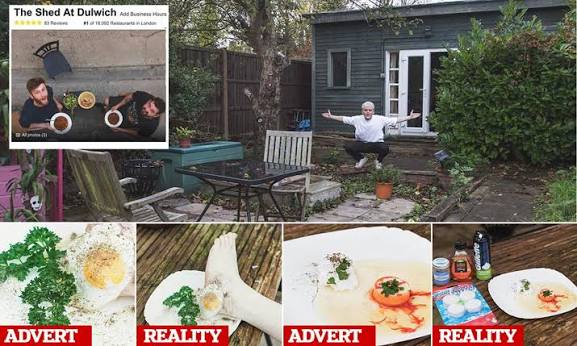
Ingredients for a luxury place: shaving foam and a foot
The “location” was Oobah's studio apartment: a wooden shed in the garden of the house, in Dulwich, south London. To register on TripAdvisor without arousing suspicion, he played the card of’exclusivity: no precise address, only the name of the street, and the wording “by reservation only”. A £10 burner phone, a minimal website, and the profile was ready..
The problem of the photos remained. No kitchen, no chef, but plenty of domestic imagination:
- An avant-garde chocolate dessert was actually a urinal sanitizing tablet painted and covered with shaving foam.
- The signature scallops were bleach tablets and dishwasher detergent placed on a damp sponge.
- The egg and meat dish, as you already know, was the sole of the foot of Oobah, positioned to simulate a premium cut.
The menu was divided not by courses but by “moods” (Lust, Empathy, Contemplation), because nothing says hipster pretentiousness like refusing to call an appetizer an "appetizer." On May 5, 2017, TripAdvisor approved the listing: The Shed enters the charts at the bottom of the London charts, number 18,149.
The Shed at Dulwich's FOMO-driven rise
This is where the’social engineering real. Butler coordinated a network of friends who began posting enthusiastic but intelligently written reviews: different computers, different IPs, and every now and then a 4 stars instead of 5, just so as not to seem too perfect. The fake customers described the rural atmosphere of the garden and the almost mystical experience of the dishes..
The phone started ringing. The answer was always the same: “We are fully booked for the next two months”.
And here is the implicit question that every London foodie should have asked himself: Why do we desperately want something just when it's denied to us? It's the syndrome from FOMO (Fear of Missing Out), and it worked better than any real marketing campaign:
- Food companies They sent free samples by searching for the address on Google Maps.
- Catering professionals they sent out CVs to get hired.
- PR agencies They offered contracts promising to bring celebrities to the venue.
The November 1, 2017, after six months of systematic rejections and fabricated reviews, The Shed at Dulwich officially becomes the London's number 1 restaurant on TripAdvisor, surpassing over 18,000 royal, starred and historic venues.
A Night of Madness (Based on Microwave Dishes)
With the page grinding to 89,000 views per day, Butler decided to do the unthinkable: open for a real night.
He cleaned up the garden, set up warm lights and heaters, even built a fake chicken coop to let customers choose “their hen”how to handle lobsters in luxury restaurants. A DJ was broadcasting pre-recorded sounds of a crowded room to cover the hum of the microwaves, while half the tables were occupied by actor-friends paid to loudly praise dishes they weren't even eating.
Real customers? Blindfolded on the street corner and led to the garden to preserve the "secrecy" of London's most exclusive venue. They were served lasagna and macaroni and cheese. frozen foods from discount stores, worth a couple of pounds, decorated with some edible flowers.
The reaction? Nobody complained. Many praised the authenticity of the ingredients, called the experience “wonderful,” and tried to book for the following week.’expectation created by the algorithm he literally had their sense of taste is turned off.
Can we trust what we read?
After the evening, Butler revealed everything and TripAdvisor removed the page, declaring that “there are no incentives in the real world to create fake restaurants” – a sentence that sounds almost comical, considering that they had just had proof of it right under their noses.
But how do you hack an algorithm designed specifically to protect us? The answer is simpler and more disturbing than we'd like: there's no need to hack anything, just understand that our judgment is often guided by what experts call “information waterfall”. It is the tendency to blindly trust the decisions of others, even when the crowd we're following doesn't actually exist at all.
So this summer, as you scroll down the screen looking for the “best restaurant in the area” or the perfect hotel, remember Oobah Butler. Don't be guided only by the number of stars and the hype of the moment: Sometimes, behind a five-star rating and legendary exclusivity, there's just a guy in the garden heating up a frozen lasagna in the microwave..

Digital creative, musician, and storyteller. I explore the intersection of humanity and technology, telling stories of AI, music, and real life. Welcome to my organized mess.”