
Tor Vergata and the Cult of Pain: When 250,000 People Buy a Ticket to Feel Last
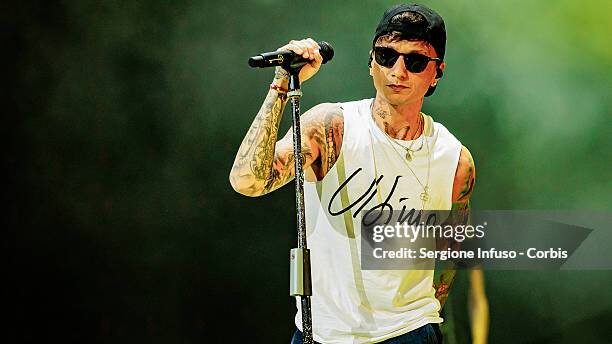
Two hundred and fifty thousand tickets sold in three hours. A number that alone would be enough to make Vasco Rossi pale, whose Modena Park in 2017—until yesterday the all-time Italian record—had 225,173 spectators. Ultimo surpassed that without even breaking a sweat, transforming a field on the outskirts of Rome into what his fans call, without irony, "the gathering of the last.".
It's not a concert. It's a local liturgy, with an all-too-predictable human geography: the vast majority come from Rome, the rest are scattered throughout Italy and (a few, but there are some) foreigners who have come especially—some have made the journey from Germany just to pitch a tent.
And here's the question that no one wants to ask seriously: What drives someone to freeze their life for ten days, sleeping on the asphalt under the late-June sun, with temperatures soaring, just for a front-row seat? The artist's staff themselves had to issue a plea for caution, as the heat had become a real risk for those who had been camping since June 18th. When anticipation of an event becomes more important than health, the collective ritual has ceased to be a gathering: it has become a symptom. It's a snapshot of a society that has dismantled almost all spontaneous spaces of belonging, leaving only that one—all-encompassing fandom—standing as the last remaining barrier. refuge identity.
The ransom that isn't there, but sells very well
The official narrative of the Ultimo phenomenon rests on one pillar: the redemption of those who start from the bottom, the voice of the marginalized. Unfortunately, as for Achille Lauro, the real biography tells of a far more comfortable origin than the one portrayed on stage. When life doesn't offer the epic of hardship necessary for the character, the packaging takes care of it: full-body tattoos, a haunted aesthetic, a perpetually wounded gaze. They're not scars, they're stage costumes—and they work, because the audience doesn't buy truth, they buy verisimilitude.
The true Achilles' heel of this construction, however, is how it withstands the onslaught of criticism. Those who set themselves up as champions of the less fortunate should be the first to embrace confrontation without flinching. Yet recent news reports reveal the opposite: uncontrolled reactions, blatant intolerance toward anyone—whether media or industry insiders—who dare undermine the narrative. It's not strength, it's fragility: the myth that can't stand being scrutinized too closely.
«"It saved my life": the anesthetic that seems like a cure
There's a phrase that Ultimo fans repeat like a mantra: his songs saved my life. True, music heals—it's one of the few non-negotiable truths of this profession. But be careful what's sold as a cure: a standardized format of sadness, designed to appeal to the gut, not to truly move anything.
Commercial melancholy offers no escape. It offers a warm shell to retreat to, not a bridge to escape. We identify with common pain not to overcome it, but to feel legitimized to remain there—and this, not the music itself, is the real product for sale: a religion of character built on the pop cult of discomfort.
In search of a harmony that is not a brand
Tor Vergata proves that the emotional-industrial machine works perfectly. But here, between these lines, beauty isn't a packaged product: it's a visceral urge for truth, with all the cracks that entails. Music that truly heals doesn't need masks or aggressive defenses against those who question it—it resonates with the authenticity of those who share a soul, not a logo.

Digital creative, musician, and storyteller. I explore the intersection of humanity and technology, telling stories of AI, music, and real life. Welcome to my organized mess.”

One Comment
Comments are closed.