Genius behind the mixing desk or killer on the loose? The music producer, this unknown.
How many times have we listened to the album of a local band or a talented singer-songwriter and thought: «Damn, this piece is the bomb. Why doesn't anyone care?».
The standard response from the average musician is consolatory: blame the algorithm, the public that only listens to trash, talent shows, unfavorable star conjunctions. There's a grain of truth in the complaint, of course. Often, however, the reality is much more cynical and brutal: that song sounds flat, asphyxiating, innocuous. Three hundred hours spent composing a celestial melody and fitting together magnificent lyrics, and then the result comes out of the speakers like soup reheated in a camping microwave.
There was someone missing on the other side of the glass of the recording studio. Someone with the coolness to tell you what to throw away and the ear to understand which frequency is taking your breath away.
In the romantic myth of music, the artist imagines creating the perfect work alone, descending the mountain with the tablets of the law under his arm. Then he enters the studio and discovers that recorded music is electroacoustic, dynamic, chemical, and, above all, applied psychology. This is where the most misunderstood figure in the history of recording comes into play: the producer.
Who is behind the glass: architect, sculptor, or confessor?
There are those who imagine the producer as a guy who smokes cigars while pressing Rec on a three-thousand-euro ergonomic chair. Nothing could be further from the truth.
The authentic producer does the dirty work. He listens to a six-minute track and orders you to cut the intro in half because it gets boring after twelve seconds. He listens to your favorite amp and explains with surgical calm that that lethal saturation, perfect when you're playing alone in the basement, in the overall mix of the song just creates a muddy mess between 250 and 400 Hertz.
Above all, a great producer has the courage to let you play what the song needs, mercilessly trampling on your ego as a guitarist or singer.
When a change of direction creates a legend
The history of rock and pop is littered with epochal turning points born precisely from the divorce from old habits and the arrival of an external vision.
Let's take the Metallica. In 1988 they published …And Justice for All: mind-boggling odd time signatures, explosive rhythms, a monument to progressive thrash. The overall sound? A dry disaster, devoid of low frequencies, with Jason Newsted's bass literally erased from the mix to make room for Lars Ulrich's machine-gunned kick drum. They had reached a dead end.
They call Bob Rock. A man who came from the glossy pop-metal of Bon Jovi and Mötley Crüe: for purists of the genre, blasphemy. Bob Rock enters the studio, looks at them, and overturns the table. He forces the band to play together in the same room to capture the groove. He lowers the tunings, slows the metronomes to let the low frequencies breathe, and places microphones meters away to record the trembling air. He grabs James Hetfield by the scruff of the neck and teaches him to sing the notes instead of just screaming.
The result is the Black Album from 1991: over thirty million copies, a telluric sound that we still use today as a test bed to test the response of studio monitors.
Shortly after, the Red Hot Chili Peppers they were coming out of the exhausting sessions of Mother's Milk, annoyed by productions full of fake reverbs and heavy layering. They rely on Rick Rubin. Rubin applies the aesthetic of subtraction: he removes the makeup, cleans the channels, rents a secluded villa, and lays bare the rhythmic interplay between Flea's bass and Chad Smith's drums. Then he leafs through Anthony Kiedis's notebooks, finds an intimate poem about loneliness and addiction, and tells him: «We have to record this.». Kiedis was ashamed, he considered her too fragile for a funk-rock band. That poem was called Under the Bridge.
Even at home we have striking examples. Let's think about Sugar in the mid-eighties: nice songs, a few appearances at Sanremo, a meteoric destiny almost sealed. Meet Corrado Rustici. Rustici brings his American experience, enlists the best overseas rhythm sections, calls on Clarence Clemons, Eric Clapton, Miles Davis, and dresses that hoarse voice with a spectacular international dynamic. Blues e Gold, incense and beer They rewrote the rules of the Italian market by selling millions of records worldwide.
The double-edged sword: when production strangles the soul
Changing drivers, on the other hand, can be like crashing into a concrete wall at 300 miles an hour. It happens every time the producer puts his own magic formula before the identity of the performer.
The most instructive disaster of the last twenty years bears the signature of Chris Cornell and his solo album Scream (2009). Cornell, one of the greatest and most visceral voices in the history of rock, decides to be produced by Timbaland, the King Midas of urban pop at the time. The idea might have been intriguing on paper; on the road, it proved a disaster. Timbaland took that raw, tormented roar and forcibly glued it over prefabricated disco electronic beats, plasticized loops, and canned R&B hooks. A total foreign body. The album plummeted from the charts after two weeks, savaged by critics, prompting Cornell to hastily retreat to the Soundgarden reunion to clear his reputation.
Or let's think about the swan song of the Clash, Cut the Crap (1985). Manager Bernie Rhodes decides to become a producer under the pseudonym “Jose Unidos”: he torpedoes the band's ideas, replaces the drums with cheap drum machines, and fills the tracks with screeching synths and randomly shouted stadium chants. A premeditated murder that led to the immediate dissolution of the group and the removal of the album from official historical memory.
The crossroads of AI: lazy standardization or curiosity accelerator?
There's a lot of talk about artificial intelligence these days. I see scores of fellow musicians panicking because an algorithmic model generates a rhyming lyric or a believable harmonic sequence in three seconds flat.
They have their sights set on the wrong target.
Writing and composition remain the domain of flesh, sweat, and lived experience: a disappointment, a sleepless night, anger at an injustice, the imperfect touch of fingers on the wood of a guitar. The algorithm can endlessly recombine existing combinations, but it completely ignores what it means to have a broken heart or to stare at the rain on the windows of a freeway.
The real seismic revolution is taking place on music production. And this is where two profoundly different paths open up.
The first road is the one taken by lazy mind. You sit down in front of the software, activate the automatic balance, hit the mastering preset button, and let the plugins decide the frequencies for you. It's the easy way to end up crushed by flatness: drummers who all use the same samples, vocals smoothed with fine sandpaper, frequencies shaped by the algorithms of streaming platforms. The result is a sterile, clinically dead perfection, where every song sounds like a carbon copy of ten thousand others released on the same Friday.
The second road belongs to the curious and open mind. Those who choose this path don't abdicate their role as craftsmen: they use modern artificial intelligence tools as a powerful boost to explore uncharted territories. They employ them as tireless sparring partners to test daring arrangement solutions, to dismantle old mental automatisms, to simulate timbral collisions that previously would have required months of blind trial and error.
I chose this second path without hesitation.
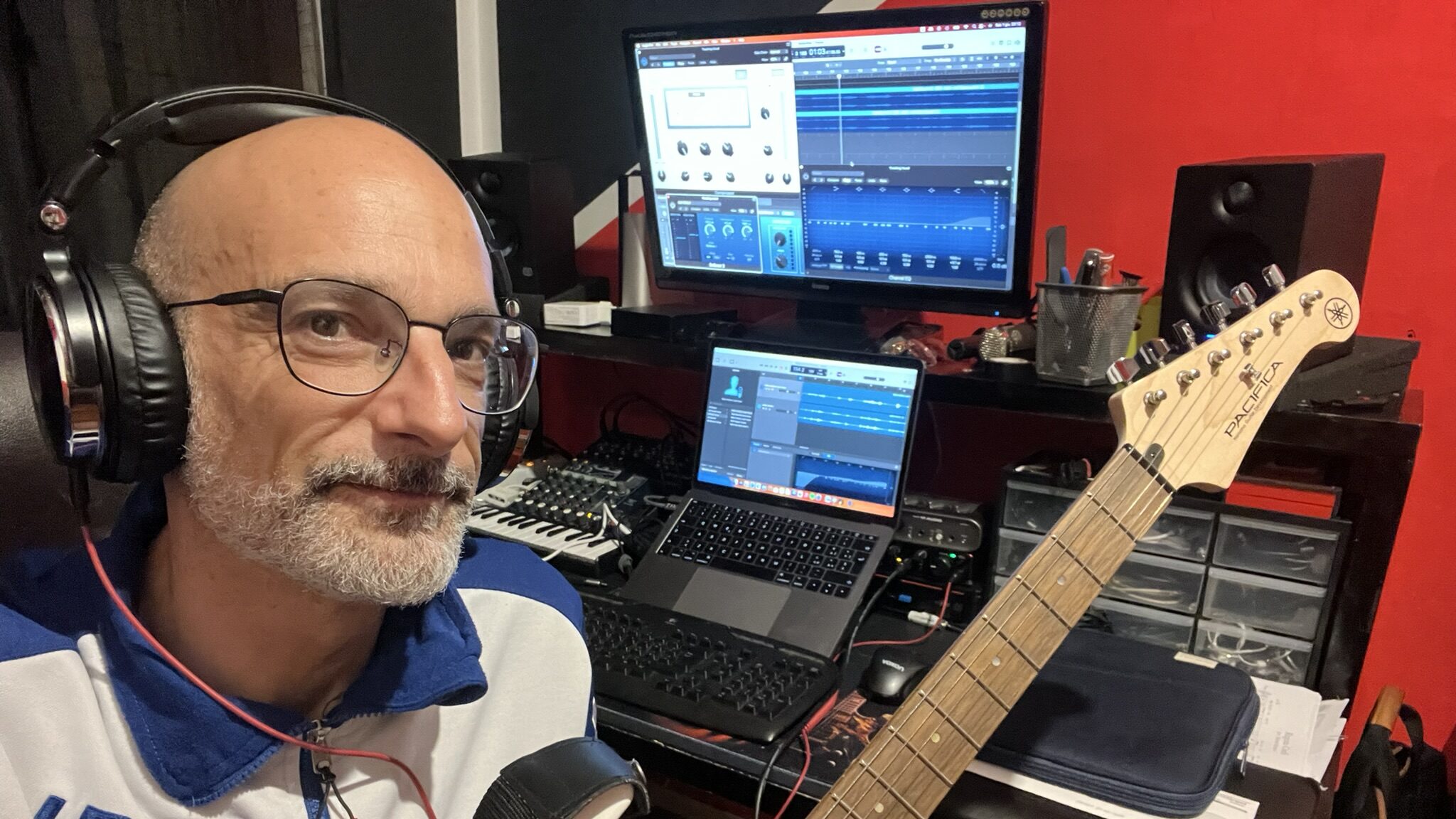
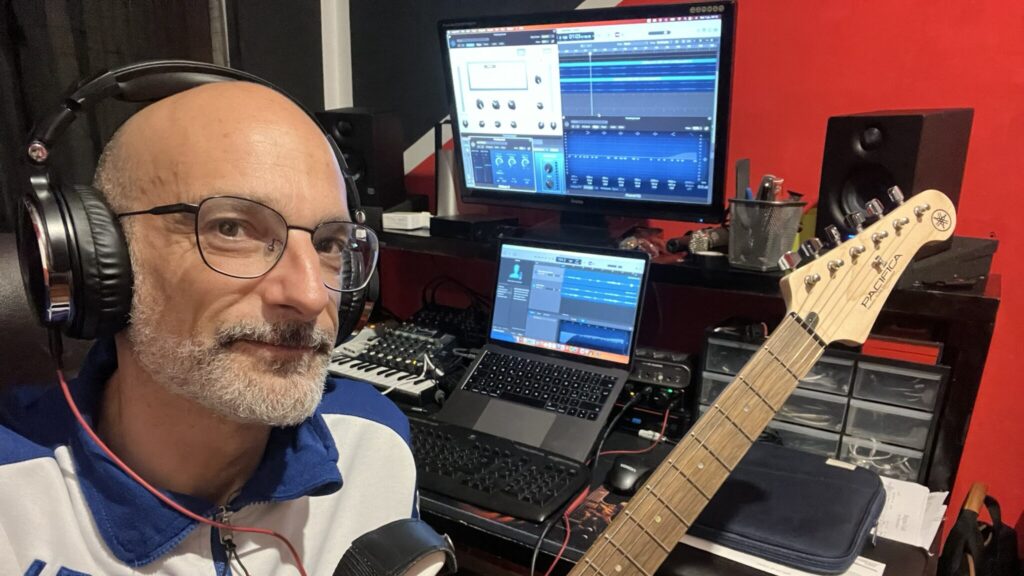
Technology must remain a high-precision screwdriver in our hands, never an autopilot to which sensitivity is delegated. In my workspace, among knobs, cables, and monitors, emotion still arises from the friction of fingers on strings; artificial intelligence becomes the lens that allows me to focus on previously invisible details, opening up sonic horizons that were just waiting for the courage to be explored.
I seek beauty everywhere. And if I encounter the laziness of prepackaged formulas around me, I ignite my curiosity, sit at the mixing table, and create it myself.

Digital creative, musician, and storyteller. I explore the intersection of humanity and technology, telling stories of AI, music, and real life. Welcome to my organized mess.”