
Metal-FM.com – Interview with Ricky Guariento
„Symphonic Reverie“, creative freedom and the power of resistance
Published on October 18, 2025
The Italian visual artist and multi-instrumentalist Ricky Guariento he told to Philipp Gottfried Of Metal-FM the story behind “Symphonic Reverie”, a sound journey of 8 minutes and 32 seconds that sends the rules of modern streaming to hell. In this interview, Ricky reveals his creative process, his international collaboration with Japanese drummer Michiko, and the philosophy of artistic resistance that is the soul of the RickyVerso. We talk about creative integrity, a total rejection of algorithms, and a visceral passion for authentic Progressive Metal.
🎵 Listen to “Symphonic Reverie”
An eight-minute sonic journey between Progressive and Symphonic Metal.
🎧 A tribute to the great progressive suites.
Let yourself be transported before reading the interview.
Philipp: Ricky, “Symphonic Reverie” is over eight minutes long—a bold choice in the streaming era. What drove you to ignore algorithmic expectations and create such a long piece?
Ricky: Eight minutes is nothing compared to the legendary Progressive Rock suites: Genesis's "Supper's Ready," Yes's "Close to the Edge," Jethro Tull's "Thick as a Brick." I remember when I was a teenager, putting on my headphones and losing myself in these endless sonic journeys. "Symphonic Reverie" is my little tribute to those musical expeditions that simply can't be compressed into three minutes. But there's more: I had to do something crazy, beyond all logic. I had to stop worrying about algorithms, opinions, acceptance. It was a gift I gave myself.
PhilippYou said this publication is a birthday present. What personal meaning does it have for you?
RickyI started working on it last year, for my 50th birthday. Up until then, in all my productions and even in projects with local bands, there was always a compromise. I realized it was time to show the world who Ricky Guariento really is, for better or worse. No filters, no adaptations. Just me.
PhilippThe song blends progressive and symphonic metal. How do you maintain emotional depth while exploring complex technical structures?
RickyFor me, technique is never an end in itself: it's the means. Every note, every rhythmic shift, every melodic variation in "Symphonic Reverie" was designed to serve the emotional journey. Complexity without emotion is just noise. I want the listener to feel, not just admire the technical prowess.
PhilippYour collaboration with Michiko spans 10,000 kilometers between Italy and Japan. What was the most surprising aspect of working remotely?
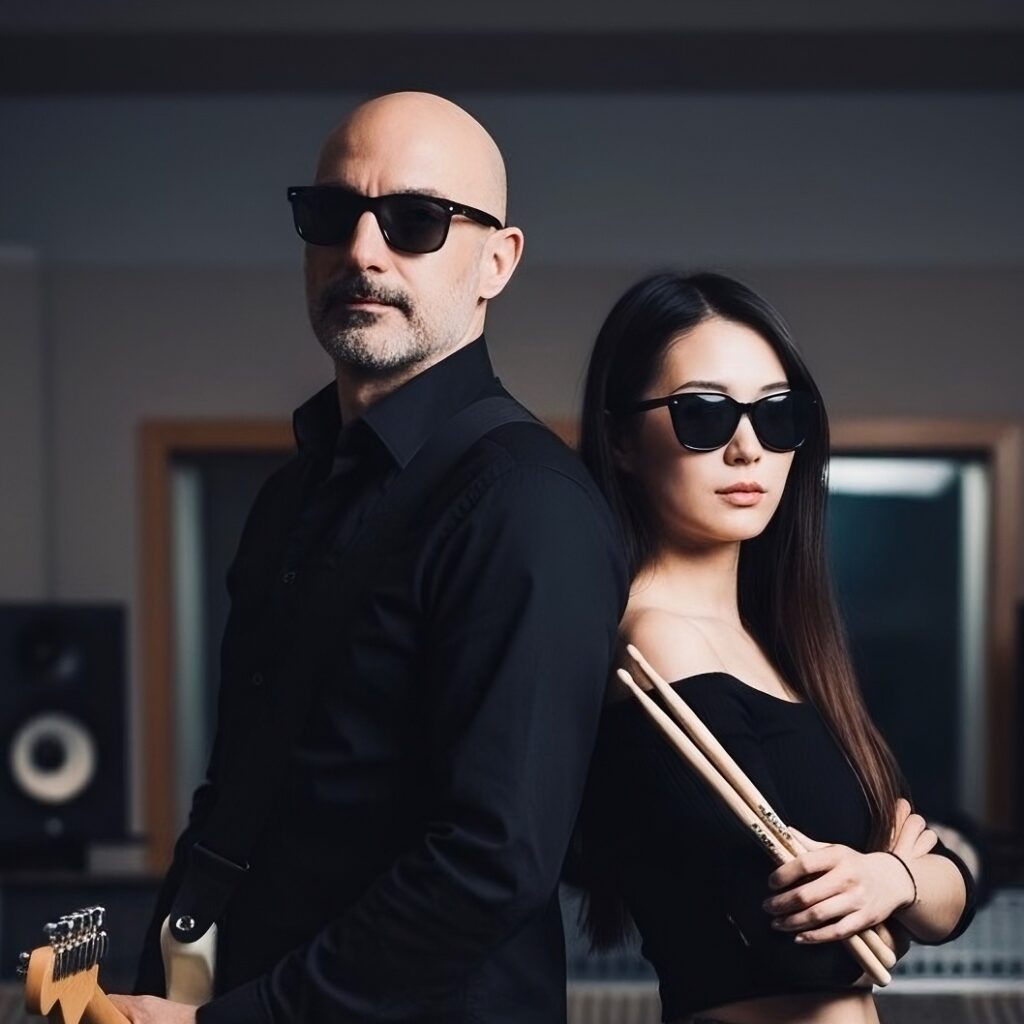
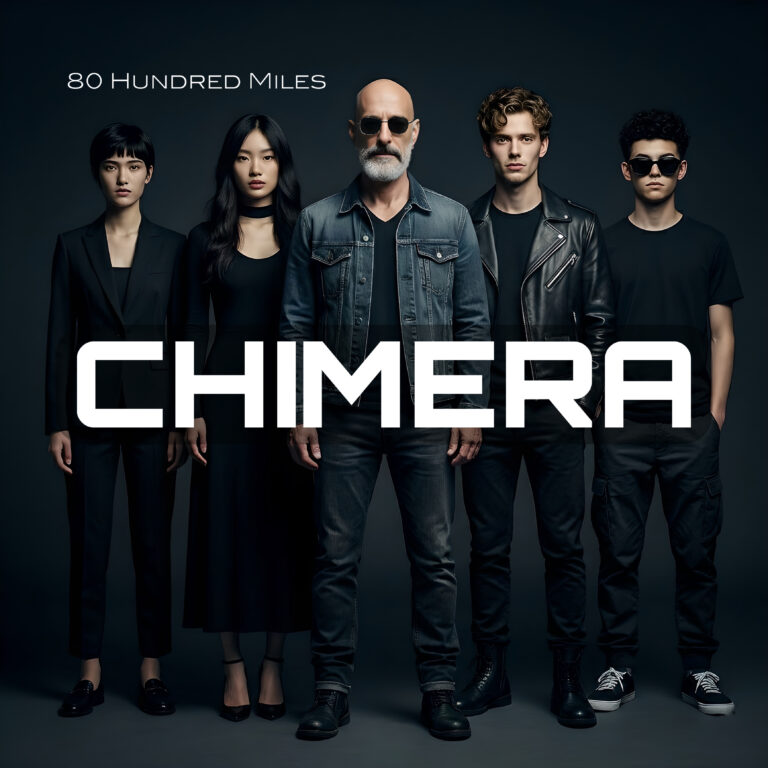
RickyWe've been working together for three years, ever since our mutual friend Michal Dijkstra introduced us and we founded the project 80 Hundred Miles. What amazes me most about Michiko is how this tiny Japanese drummer hits the kit with incredible power and ferocity! But most importantly: we have a musical telepathy, despite the distance, the different cultures, the age difference. We probably have the same metallic blood in our veins! When I sent her the first riffs, she immediately said "yes," before I even finished explaining. She already understood everything.
PhilippYou've said that AI has been just a bridge, not a creative partner. Where do you draw the line between human artistry and technological support?
RickyAI is a tool, an executor, not a creative partner. I used it to speed up mixing: dozens of short fragments to align, synchronize, coordinate. It would have been crazy not to use tools that streamlined the process. But the creative process, the decisions, the soul of the work: that's all human.
PhilippAs an artist inspired by Caravaggio's chiaroscuro, do you think of sound in terms of light and darkness? How does this influence your musical narrative?
RickyThere's an expression I love: "sonic painting." My passion for art and photography helps me a lot with this. When I compose, I think in terms of light and shadow: this section is dark, here the light explodes. For example, my previous piece "Doomsday" was built entirely on visualizations. "Symphonic Reverie" is the same thing: contrasts, drama, sudden changes in tone and intensity. It's sonic painting.
PhilippThe title "Symphonic Reverie" evokes something dreamlike. What mental or emotional journey did you want to create for the listener?
RickyThe title says it all: I wanted to create a fantasy, a daydream. Not a linear journey, but a place where everyone can get lost and find themselves again. I wanted to evoke that feeling you get just before falling asleep, when reality and fantasy blur and every sound becomes a story. If, even for just a few minutes, you forget where you are and simply travel, in your mind or heart, then I've done my job.
PhilippMany artists today are chasing virality instead of vision. What does artistic integrity mean to you when algorithms seem to dictate taste?
RickyMany years ago, even though I had the chance, I gave up on a professional music career. “Your music is interesting, but…” “Okay, I'll produce you, but let's do something else…” “Forget that stuff, you have a beautiful voice…” And now I'm supposed to let an algorithm guide me? No chance. I've already refused to compromise when humans asked me to; why should I bow to a piece of code? Artistic integrity means staying true to your vision, even when no one's listening. Especially in that case.
PhilippYou bring together different creative identities: solo work, soundtrack production, 80 Hundred Miles, and the Cohors Petrae project. How do these projects influence each other?
RickyAnd these are just the most recent! Just a few of the many faces. I've experimented with everything from jazz to flamenco, from classical music to electro-pop, and often mixed it all together in search of something new. I don't like to define myself. I always need new stimuli, new adventures, but on my own terms. How do they influence each other? I'd say they blend more than influence each other. They're all part of the same restless creative impulse.
PhilippYour quote, "To live is to create, and to create is to cease from no longer living," sounds very philosophical. How do you live this idea in your daily life?
RickyI live in a constant creative urge, every moment of the day. I can't explain it, but when I wake up in the morning I already have ideas for a comic, a story, a song, a photo I want to take. And throughout the day, every little thing—a gesture, a situation, a phrase—can become a source of inspiration. It's as if my antennas are always on. Creation isn't something I plan: it's the way I breathe.
PhilippAn instrumental composition means telling a story without words. How do you ensure that the emotion and narrative still come through?
RickyI experience emotions on myself. I write what I want to "feel" when I need to hear something that conveys that very emotion. I compose for the listener within me and trust that others will find their own meaning in it. Then... everyone can hear it as their own history has taught them. That's the beauty of instrumental music: it leaves room for interpretation.
PhilippWhat role does silence or restraint play in your music, especially in a genre that often celebrates intensity and complexity?
RickySilence can be more powerful than the chaos that surrounds it. It can be the breath you need when you're escaping something scary. It can be a moment of calm after a strong emotion. It can be a pause to gather your thoughts before continuing a long journey. Without silence, intensity loses meaning. It's the contrast that gives strength to both.
PhilippProgressive metal has always been an evolving genre. Where do you think the next wave of innovation lies?
RickyParadoxically, I think the future of Prog Metal lies in a return to its roots. After years of technical superiority and self-admiration, there's a return to a more emotional Prog. Bands like Haken and Caligula's Horse are examples of how emotion shouldn't be sacrificed for technique. The next wave won't come from playing faster, but from feeling more deeply.
PhilippCollaboration with Michiko also brings together two cultures. Has this experience changed your perspective on rhythm, timing, or energy?
RickyTo be honest: Michiko, even though she's half my age, brought out exactly what was in me. It was total harmony on every level. We spoke the same musical language. Culture didn't matter. Age didn't matter. When two musicians share the same metallic blood, geography becomes irrelevant. She understood what I needed before I even finished explaining.
PhilippYou've created your own artistic universe: the "RickyVerse." How does this concept connect music, images, and storytelling?
Ricky"RESISTANCE" is the word that connects everything. Resistance against ignorance, hatred, cruelty, lies, and false freedom. I want to make visible what people don't want to see. I want to give a chance to those who think like me, to those who aren't afraid to stop and listen to music for almost nine minutes. To those who don't just survive by following the herd, but want to be the black sheep. The RickyVerso is a refuge for the restless, the dissatisfied, the vigilant.
Philipp: Being a salesperson for a steel company by day and a musician by night, do you find any contrasts or parallels between corporate structure and artistic freedom?
RickyI'd say they're two parallel lives that sometimes intersect. Even in the business world today, creativity and the ability to stand out are essential. And I often use my music for InoxTubi's marketing campaigns, so I save on royalties (laughs). But seriously: both fields require discipline, vision, and the courage to take risks. The difference is: in business, you negotiate with customers. In music, you negotiate with yourself. And anyway, stainless steel is still… metal!
PhilippEvery creative act involves risks: artistic, emotional, even financial. What risks did you take with "Symphonic Reverie"?
RickyThe emotional journey was intense: highs and lows between euphoria and exhaustion. There were moments when I couldn't see the goal anymore, and it was depressing. The biggest risk was creating something that no one would care about. But, honestly? I didn't care. The best compliment I ever received was: "I don't recognize you anymore. This doesn't sound like you." Mission accomplished. It means the real Ricky has finally emerged.
PhilippIf “Symphonic Reverie” were an immersive art installation, how would you imagine the space, the lights, the textures, the atmosphere?
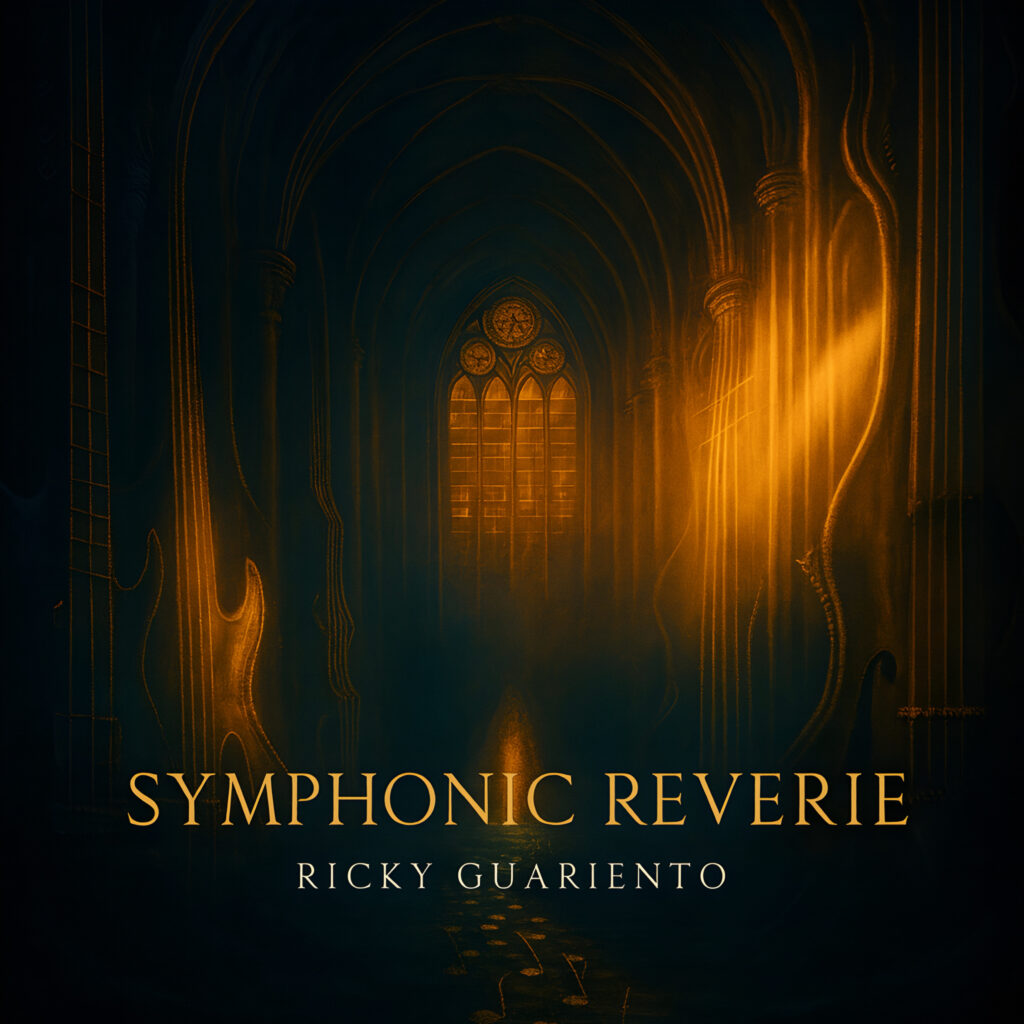
RickyI imagine a space like a Gothic cathedral, like the one on the album cover. High vaults, stone columns. The light starts from the darkness, then slowly shines in warm amber rays from behind, casting long shadows. As the music intensifies, the light pulses and changes: cool blues in the quiet passages, incandescent gold and deep red in the heavy sections. The textures would be cold stone contrasting with the warm lighting, just like the contrast between silence and chaos in the music itself. I want people to feel simultaneously small and powerful. Surrounded by something ancient yet full of new energy.
PhilippFinally, what message or emotion do you want listeners to take away after the last note?
Ricky: Simply… that they traveled with me. And whatever emotion remains, I hope it stays for a while. Not lost in the next scroll.
You can find the original interview on Metal-FM.com

Digital creative, musician, and storyteller. I explore the intersection of humanity and technology, telling stories of AI, music, and real life. Welcome to my organized mess.”

5 Comments