Europe heading for war? We may already be there.
A thought spoken out loud, amidst drones in Leipzig, repurposed sheet metal, and the forgotten wisdom of Herodotus.
I suspect - and I am convinced that I am not the only one - that someone is pushing in a covert way Europe towards war, giving it the form of a script already written but never spoken aloud. No social media paranoia: we're faced with a sequence of events that, arranged in a row, compose a precise plot. Let's try to look at them together, lucidly, without crying aloud, without pretending not to see.
The fact: drones over Leipzig
On August 4, a drone loaded with explosives was intercepted at Leipzig/Halle cargo airport, positioned a short distance from aircraft used for logistics to Ukraine. This was not an isolated incident: other drones appeared in the following days, some carrying traces of military explosives.
At the end of August, the German government broke the diplomatic deadlock, moving with unusual speed: it formally attributed the action to Moscow, closed a Russian consulate and a Russian cultural centre in Berlin and described the affair as an open “hybrid attack”.
We are within the classic perimeter of below-threshold maneuvers: too nuanced to constitute an overt act of war, too serious to be archived. A continuous test of the continent's nerves, its ability to respond, and its psychological and economic resilience.
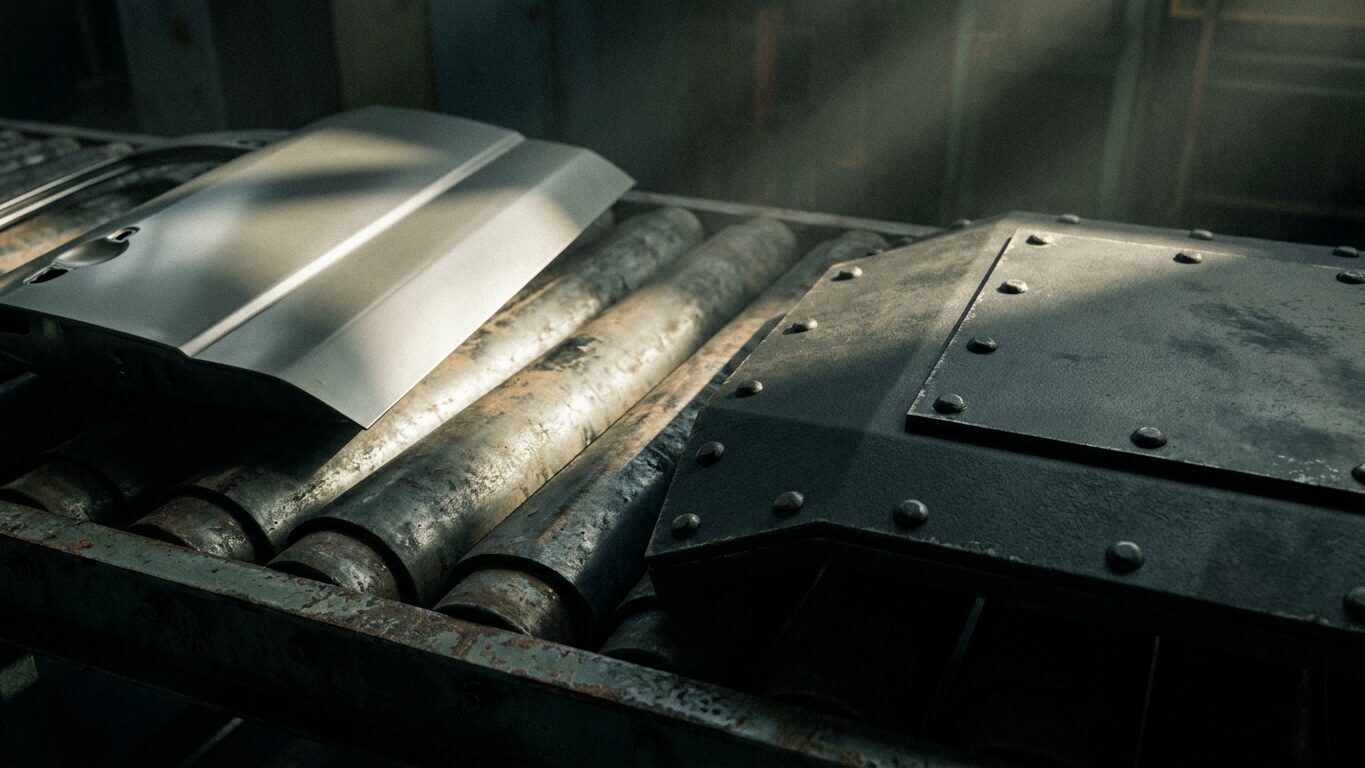
The fact: the car's sheet metal becomes a defense sheet metal
Not far from Leipzig, another piece of the puzzle falls into place with unsettling timing. Volkswagen is negotiating with the Israeli company Rafael to convert its Osnabrück facility—a historic plant threatened with closure—to produce components for the Iron Dome system: mobile launch platforms, heavy trucks, and generators.
This isn't a one-off. Defense giant Rheinmetall had already explored the possibility of assembling tactical vehicles at the same plant. The phenomenon even has its own industry label: “Auto2Defense”. In short: take the stalled automotive plants, workforce, and expertise (crushed between Asian competition and a lame electric transition) and divert them toward military demand, capable of guaranteeing multi-year orders and stable margins.
The political dissent that has emerged in Germany against the VW-Rafael agreement demonstrates how glaring the contradiction is: Civilian factories that slow down find salvation by becoming cogs of defense.
The numbers behind the race
Behind these choices there are not feelings, but balances:
- Between 2021 and 2024, European military spending grew by more than 30%, surpassing the 343 billion euros.
- In 2025, estimates show a range between 381 and 418 billion.
- For 2026, projections reach 100% 454 billion euros (approximately 2.41 tp3T of the European Union's GDP).
- The European Central Bank recalls that the NATO parameters projected to 2035 aim to allocate up to 5% of GDP to safety.
The trajectory is set and the economic mobilization has just begun.
Europe Heading for War: Where Are We Really?
Let's put aside both apocalyptic panic and superficial reassurances and look at things as they are.
Hybrid warfare is the present. Infrastructure sabotage, drone strikes, cyber warfare, and simulated provocations are already a daily reality on European soil. Strategic analysts consider this constant pressure to be the most high-impact scenario for the coming years, far more realistic than a heavy-lift invasion.
Conventional conflict remains an extreme option. An open and traditional conflict within the borders of the European Union is treated in the simulations as a worst-case scenario: the worst and least likely scenario, precisely because it would trigger mutual defense clauses and risks of nuclear escalation that anyone, however cynical, would prefer to avoid.
The industrial picture, however, reveals an uncomfortable truth: the auto crisis and the expansion of armaments are sharing the same warehouses. This doesn't mean that every piece produced will end up in an all-out conflict on our doorstep: replenishing warehouses fuels exports, supports regional theaters, and replaces obsolete material. The fact remains that an economy that learns to live off weapons then struggles to wean itself off them.
The phrase that I have carried within me all my life
I grew up listening to those who had experienced the Second World War in the flesh – orphans, childless parents – utter a terrible phrase in a low voice:
«It’s bad to say, but it would take a war to put things right.»
It is a refrain that runs through the generations, dull and stubborn.
Two thousand five hundred years ago Herodotus he had already dismissed the issue with disarming lucidity:
«"No one is so foolish as to prefer war to peace: in times of peace, sons bury their fathers, in times of war, fathers bury their sons."»
Yet that illusion resurfaces. From afar, filtered by memory or boredom, war is mythologized as a clean break, a violent catharsis capable of undoing the knots that daily politics drags unresolved.
Peace has the flaw of being gray: it thrives on laborious negotiations, disappointing compromises, and slow-to-die injustices. Human psychology often falls prey to the trap of traumatic shortcuts, just to escape the patience of gradual construction.
Talking about simple human stupidity is hasty. That sentence reveals rather an ancient pain never worked through that turns into myth: the desperate idea that only total destruction can give meaning to a malaise that we otherwise cannot explain.
Let's close the circle
There are no cheap, consolatory answers. The drones over Leipzig, the body presses reprogrammed for armor plating, the soaring state budget curves: these are visible pieces of a reality that is changing shape around us.
What's left for us to do — as people who write, reflect, compose music, or simply try to understand our time — is reject the deception of the tabula rasa. Preserving the toil of peace, with all its imperfection, means not giving in to the call of the abyss. Herodotus understood this twenty-five centuries ago. It continues to be one of the few reliable compasses.

Digital creative, musician, and storyteller. I explore the intersection of humanity and technology, telling stories of AI, music, and real life. Welcome to my organized mess.”