
Facebook & Co.: towards the end of the social Wild West?
For over twenty years, we've swallowed the fairy tale of the global village. We were told that the internet would be the perfect place to exchange enlightened opinions, cultivate relationships, and share snippets of life. We woke up with hypertrophic thumbs, the attention span of a goldfish, and a subtle tachycardia at every phantom notification. We thought we were strolling through an open agora. In reality, we were sitting at a casino slot machine, designed millimeter by millimeter to keep us from getting up from our stools.
Something has seriously gone wrong with Menlo Park's perfect toy.
In the United States, an unprecedented coalition of over forty states, joined by thousands of families and hundreds of school districts, has decided to take the owners of Meta and other Big Tech companies to federal court. The investigation is being coordinated as part of the ongoing litigation. MDL No. 3047. The prosecution has stopped getting bogged down in the usual barroom arguments or individual user-posted content. The judges' move is much more down-to-earth: product defect liability. For decades, Silicon Valley has shielded itself with the infamous Section 230, claiming to be a simple distributor, a postman who isn't responsible for the letters he delivers. The magistrates have finally exposed the ruse. Software architecture is not a free speech opinion, it is an industry component. And if you design a mechanism to capture and monetize the biological attention of minors to the point of devastating their sleep and emotional stability, you are responsible for it exactly as much as those who market a toaster with exposed wires or a car with tampered brakes.
The silicon giants are naked. And the excuse of fate no longer holds water.
Project Mercury: Big Tobacco's Ultimate Guide
The most sordid and fascinating part of this judicial earthquake emerges from the internal documents seized from the defendants. The company's top management knew everything for years. The details of the investigation on Project Mercury They reveal a striking parallel with the tobacco multinationals of the 1990s. In 2020, Meta researchers conducted a test with the company Nielsen: they asked a group of users to turn off Facebook and Instagram for just seven days. The internal results spoke clearly. Those who unplugged showed an immediate drop in levels of anxiety, depression and negative social comparison..
Management's reaction was textbook cynicism.
Instead of intervening to protect its users, management hastily deleted the research. They dismissed the data as “smoke in the eyes” and showed up at a Congressional hearing to swear, with his hand on his heart, that scientifically isolating the negative impact of the platforms was pure utopia. Meanwhile, internal reports recorded hordes of kids hypnotized in front of screens between midnight and four in the morning. Philip Morris, in the era of light cigarettes, could only have taken notes.
Our silence: when politics thrives on reels
In our beautiful country, all this is barely talked about, relegating the news to a few sidebars on the back pages of online newspapers. After all, it would be a surprise to find it on the front page. We live in a republic founded on visibility at all costs, where parliamentarians have abandoned their programs to transform themselves into content creator chasing easy engagement, while the only speeches with any logic and political substance are delivered by real comedians in late evening.
The stakes are frightening to too many.
Imagine what would happen to the national public debate if the infinite feed, if the algorithm that rewards the visceral anger or if a warning message blocked the use of apps at night. A structural change in the management of social networks would risk upending the country's entire government apparatus. Without the dopamine rush of polarized commentary and the monetization of daily controversy, many of our communications strategists would have to learn to actually work.
The end of the Wild West and the return to the real world
The first cracks in the wall of impunity are now visible to all. The recent Los Angeles court ruling KGM v. Meta He ordered the tech giants to compensate a girl who had been exposed to emails since the age of six, establishing a historic principle: Addiction is not the fault of the family alone, but the direct result of deceptive design.. The compensation demands advanced by the United States are approaching twelve-figure figures that will force the platforms to reach a global settlement.
The unregulated amusement park is closing its doors.
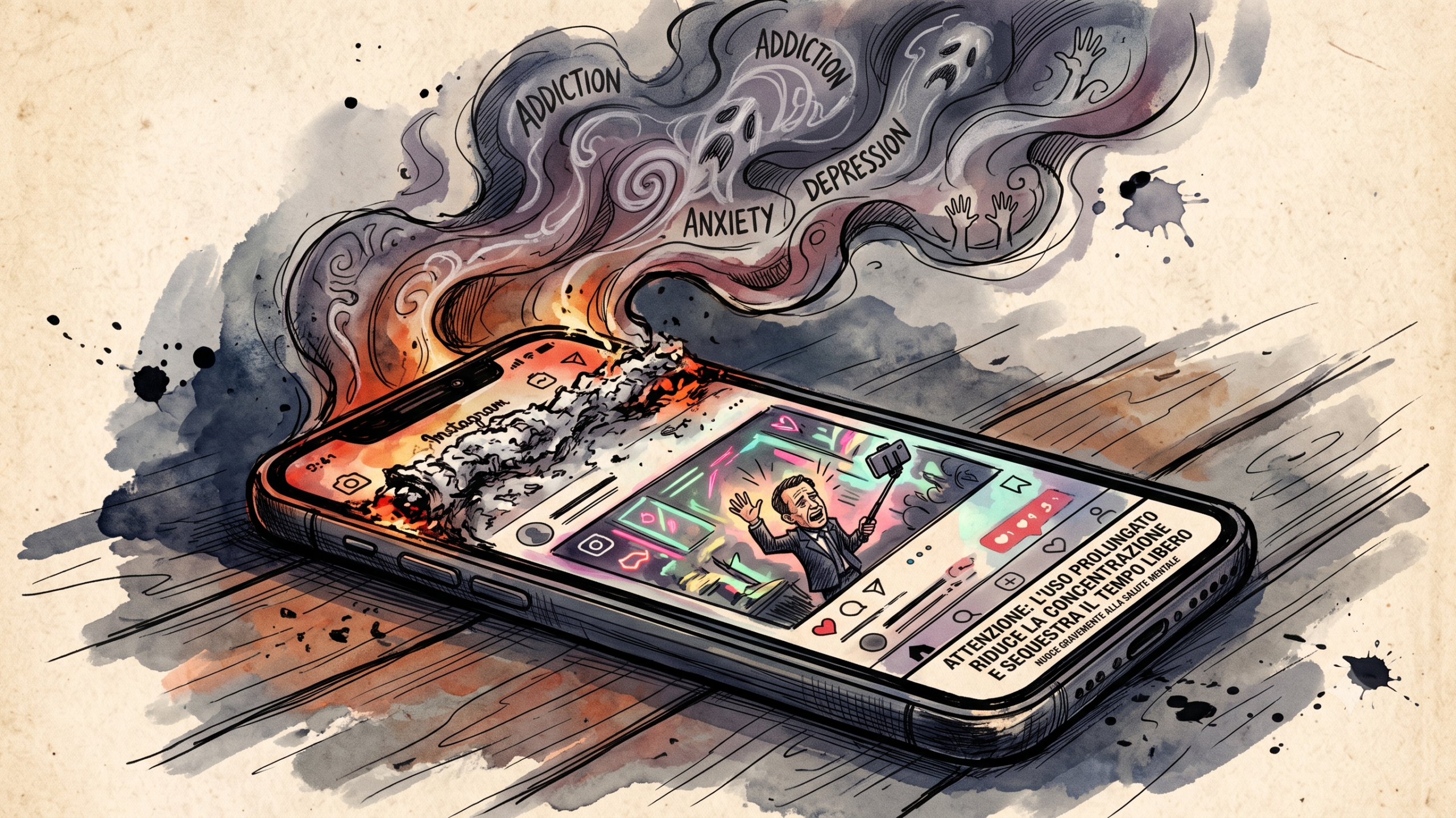
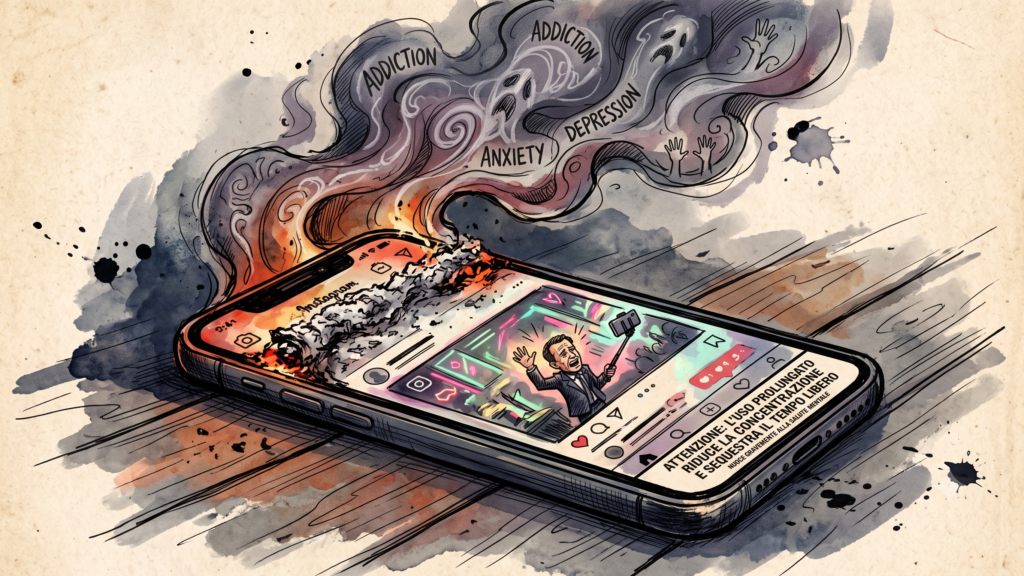
In the next few years, we will see forced autoplay mechanisms for minors disappear, purely chronological feeds will return, and we will see health warnings appear on interfaces very similar to those on packages of blondes: “Warning: Prolonged use reduces your concentration and hijacks your free time.”. And perhaps this will be a good opportunity to remind ourselves that real life, the kind worth telling and playing, always happens outside the luminous perimeter of a display.

Digital creative, musician, and storyteller. I explore the intersection of humanity and technology, telling stories of AI, music, and real life. Welcome to my organized mess.”





Really helpful post. If you need image-to-video and multimodal clips, check out WanVideoGen at . WanVideoGen