I'm not an oddity: social media avoidance is a global movement (and the data proves it)
When I started a year ago disconnect from social media, and after various tests I arrived at the final formula of the RickyVerso as a personal blog, I felt a bit like a white fly.
In fact, I discovered a community made up of many people who can no longer stand being subjected to whims of algorithms and the rules imposed by someone who makes billions simply by deciding who can publish what, and how much visibility to give it.
From a few people who read my reflections or my stories on Facebook & Co., scattered in a feed which only rewards certain types of content, now there are a fair number of people visiting my blog why he wants to do it, and a significant portion comes directly from the online searches on some topic I deal with.
It's not nostalgia, it's a prediction that came true
What seemed like a personal intolerance actually has a precise technical name in the world of market research: “social media decay” (the decay of social media).
In December 2023, the analytics company Gartner had predicted that by the end of 2025 Half of consumers reportedly abandoned or drastically limited their use of social media, driven by the perception that the quality of the platforms had deteriorated.
The 53% of users interviewees already believed that social media had "decayed" compared to the past, citing misinformation, toxicity and bots as the main causes, while beyond 70% He feared that further integrating generative AI into feeds would make matters even worse.
By mid-2026, with data collected in the fall of 2025 on the table, we can say this without too many mincing words: that prediction came true, just not in the way everyone expected.
No one has deleted their accounts en masse: social media users worldwide have actually grown to 5.66 billion (+4.81 TP3T on a yearly basis). The decline is not in the number of subscribers, but in the time that people actually dedicate to the platforms, and that's exactly the data that matters. Even Mark Zuckerberg, in April 2025, publicly admitted that the time spent on Facebook and Instagram had decreased. “significantly”. If he says so, maybe I'm not the odd one out.
The Great Silence: Less Time, Less Sharing
The numbers of GWI They tell the same story from a different angle. For the second time in over ten years of surveys, the average daily time spent on social media is decreased globally, a reversal of the almost uninterrupted growth of previous years.
The analyses conducted by GWI for the Financial Times confirm that:
- Time spent on social media has reached peak in 2022 and has been steadily declining ever since.
- Adults in developed countries have moved to about two hours and twenty minutes a day at the end of 2024 (a 10% drop from the peak).
- The most interesting fact is who is driving this decline: not the nostalgic boomers, but teenagers and twenty-somethings, that is, the historically most “connected” users.
Social media is no longer “social”
The phenomenon has a structural cause, not just an emotional one. Algorithms have progressively replaced the content of friends and relatives with sponsored posts, commercial influencers, and advertisements, transforming feeds into advertising windows more than in relational spaces.
It is no coincidence that, according to the most recent data, social advertising spending has fallen to’11.3% of the total marketing budget, the lowest level in seven years: brands are also turning around their portfolios.
It is exactly the dynamic that I had intuited when speaking about the “whims of those who decide who can publish what”: the platform is no longer the place where people talk to each other, but the place where people are sold to advertisers.
Even the youngest are fleeing
If you thought this was a battle only for those over thirty, the data from Pew Research they dismantle the idea:
- Facebook use among American teenagers is collapsed from 71% of 2014-2015 to just the 32% in 2024.
- Only the 20% some teenagers still use it on a daily basis.
- X (formerly Twitter) It went from 33% to 17% in youth penetration in the same period.
Even the Gen Z, a supposedly "social-native" generation, is showing strong signs of fatigue. Among the most common complaints collected by analysts are:
- The information overload (29%)
- There perceived dependence (27,2%)
- THE'’negative impact on mental health (22,4%)
The future is “acoustic”
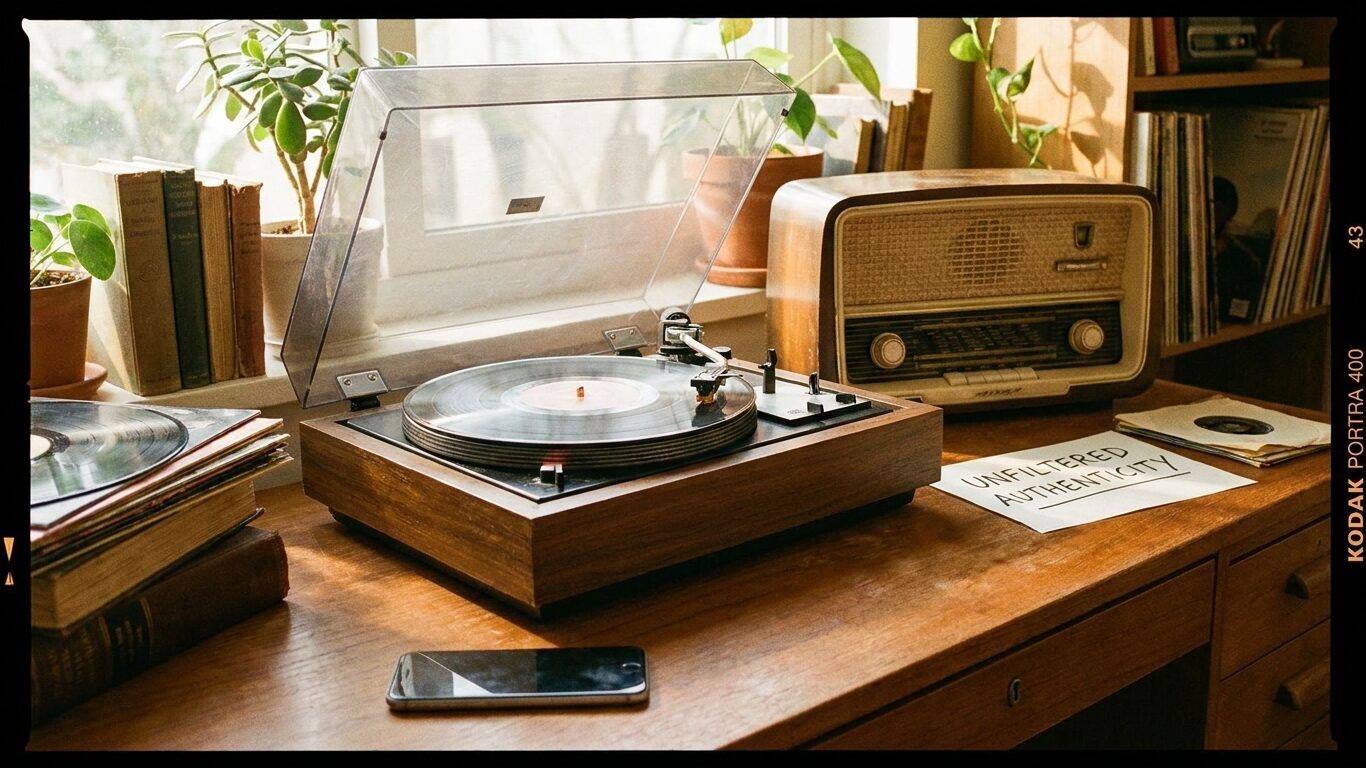
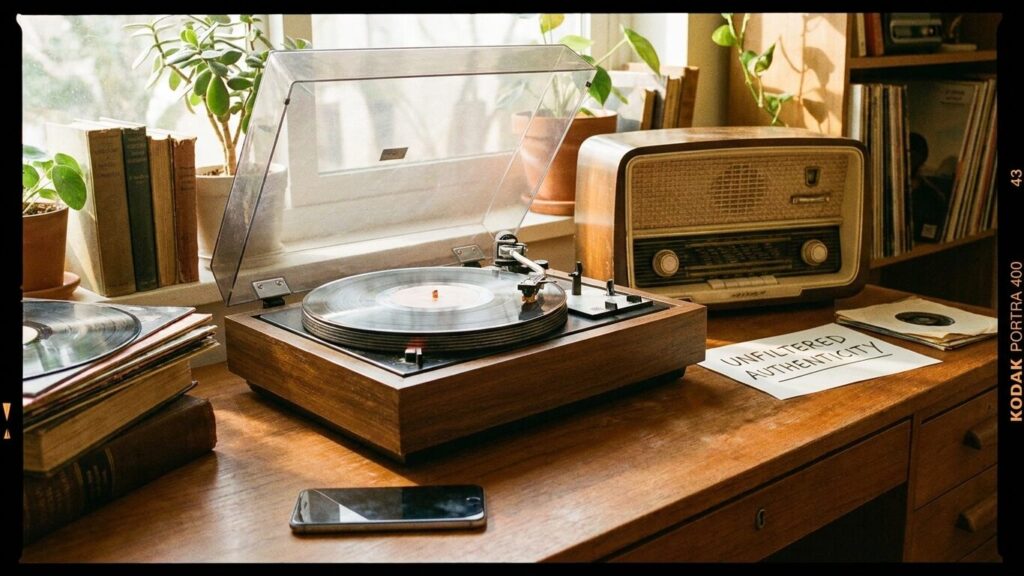
Gartner has coined an almost poetic term to describe this counter-trend: “acoustic brands” (acoustic brands), that is, companies that choose to position themselves precisely on the absence of algorithms and the balanced use of artificial intelligence in their relationships with the public.
The forecast is that by around 2027 the 20% of the brands will focus on this authenticity “without filter” as a distinctive feature, appealing to an audience increasingly wary of entirely machine-generated content. In a certain sense, this little blog, without knowing it, was ahead of this trend.
Real-world cases confirm that the strategy works even outside the world of personal blogs:
- Lush Cosmetics abandoned Facebook, Instagram, TikTok and Snapchat in 2021, giving up over 12 million followers, and saw sales grow by 20% in the UK the following year.
- The chain Wetherspoons deleted over 900 local social media accounts, but still recorded a growth in revenue of 7%.
They are not exceptions: they are a pattern.
Less scrolling, more stories
Our newsletter “Less scrolling, more stories” and the choice not to bend to Meta's rules are not nostalgic whims, but part of a global movement documented by those who study digital behavior on a scale of hundreds of thousands of people.
There is a segment of readers hungry for this slow, textual, human approach — and direct channels such as personal blogs and newsletters are exactly the place to intercept it, with a return on the relationship that the same market analyses place well above that of cold social advertising.

Digital creative, musician, and storyteller. I explore the intersection of humanity and technology, telling stories of AI, music, and real life. Welcome to my organized mess.”