
5 Seconds of Madness: When Artificial Intelligence Saves an Idiot
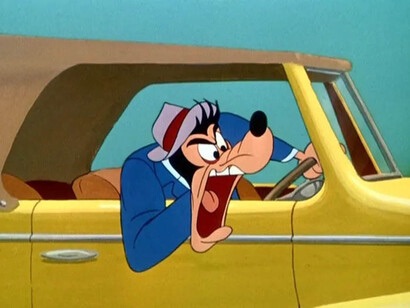
The horn hits me like a punch in the gut. I'm halfway into the intersection, everything calculated: speed, space, timing. Fifteen meters of headway, left turn signal flashing, no disruption to traffic. Yet someone is honking as if I'm committing a crime against humanity.
Let's go back twenty seconds. I'm on the northern ring road exit toward Limena, just before the highway. Earlier than usual—traffic is flowing as rarely happens. I come down the ramp, turn left, and a car passes me. I check my mirror: the next one is still far away, going the same speed as the previous one.
I accelerate. I catch up with the flow of traffic and begin to shift to the left. No risky maneuvers, no Sunday-driving gambles. Just applied physics and common sense behind the wheel.
Then comes the horn.
The car following me from the ring road is no longer maintaining speed. It's accelerating. Full speed ahead. The horn continues unabated, and the high beams are added to the strobe mode. I move to the right, slowing down—mostly to figure out what the hell is going on.
He passes me at breakneck speed. I turn my head. The guy is yelling at me. Red face, angry gestures, road warrior expression. A flash, a flash, an instant.
Out of the corner of my eye – while I'm still turned away with the probably dazed expression of someone witnessing the absurd – I see a red flash.
Stop. The car in front is braking.
In my mind, I can already see the crash. The sound of sheet metal, the glass, the airbag deploying. The poor soul who will find this madman inside the car.
But modern machines are smarter than us. Some sensor controlled by a self-learning AI realizes that its idiot owner is about to go "boom.".
Emergency braking. So violent that I see the unwary driver lurch forward, restrained by his seatbelt. (Too bad, I think. A nice fracture to his nasal septum on the steering wheel rim might have helped.).
But physics has its rules. No matter how powerful the brakes on that black SUV with the propeller in front, inertia takes its toll. A sharp "thunk" of plastic touching. Both cars stop. I slip to the left, still in the merging lane, an involuntary witness.
Five seconds. It didn't last more than five. That's all it takes for a turbodiesel underfoot, connected to a brain devoid of judgment, to gain a few dozen kilometers per hour and cause an avoidable rear-end collision.
This is enough to make me doubt, once again, the human race.
I wonder: how long will it take before we invent judgment sensors to implant in the brain? Because evidently car sensors work better than the driver's brain. Algorithms beat instinct. Silicon saves the flesh.
And I, who spend my time distrusting algorithms and seeking human authenticity, find myself rooting for a machine that brakes for its owner.

Digital creative, musician, and storyteller. I explore the intersection of humanity and technology, telling stories of AI, music, and real life. Welcome to my organized mess.”