Half a century of Apple: from my "Papa Smurf" to the iPhone, passing through the greatest flops in history.
Today Apple turns 50. And I find myself writing this piece with that strange feeling you get when a very old friend—one of those with whom you've argued, reconciled, who has helped you do wonderful things and sometimes disappointed you—blows out the candles on a cake you didn't expect to be so big.
April 1, 1976. Yes, April Fools' Day. In Steve Jobs' parents' garage in Los Altos, California, three guys—a visionary, a brilliant engineer, and a third who quit almost immediately, selling his shares for a handful of dollars, one of those sliding doors that makes your stomach hurt just thinking about it—they signed Apple's birth documents. They didn't know, or maybe they did, that they were changing everything. Absolutely everything.
My Papa Smurf and the ready-made canvas
I have a score to settle with Apple. An emotional score, the hardest kind to settle.
My first encounter was called "Papa Smurf." Not the little blue man from the comics, though the metaphor holds true: small, colorful, slightly over-the-top, and with a sense of community. It was an iMac G3, painted Bondi Blue. Jobs had chosen that blue, inspired by the waters of Bondi Beach, Australia. It was the late '90s, and that translucent, squat computer, which looked like it had come out of a Japanese cartoon rather than a tech factory, was there on my desk telling me just one thing: IT doesn't have to be visually awful.
In a world where PCs looked like tax binders, "Papa Smurf" was a statement of intent. A gentle slap in the face of the dullness of the tech world.
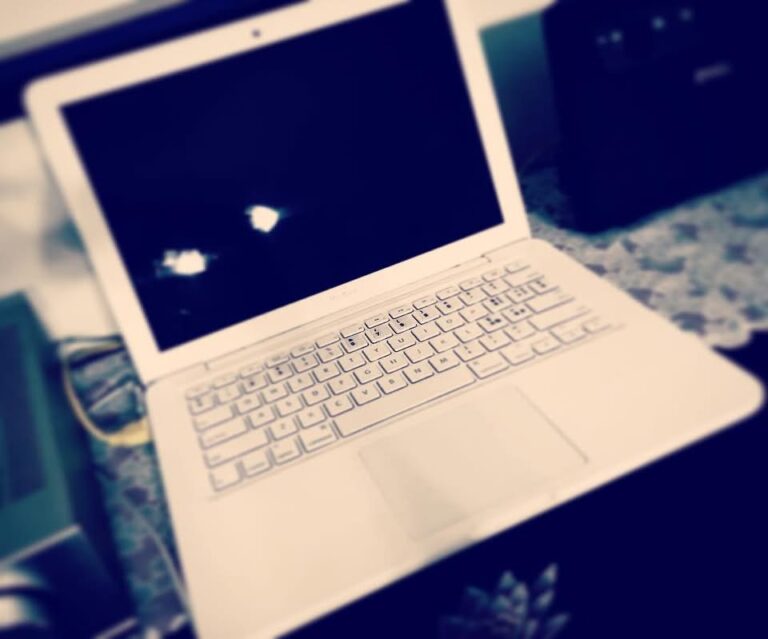
But what really captivated me wasn't the colorful plastic. It was turning it on. Finding it right there, without searching, without installing anything, without going crazy with the wrong drivers and codecs, a ready-to-use creative arsenal: software for music, for photos, for video. What would become the iLife ecosystem—iMovie, iPhoto, GarageBand—was already there waiting for me like a canvas already stretched, with the brushes clean on the edge and the colors open. For someone like me, for anyone with a creative spark inside just waiting to be stifled by technical bureaucracy, it was a boost sensational. I didn't have to learn how to use the machine: I could do things directly. And later also on the move with "“Blondie“.
The apple has always bitten history
There's something powerful about the symbol Jobs and Wozniak chose. The apple isn't a neutral logo. It's an archetype. It spans human history with almost brazen force: the forbidden fruit of Eden, the original temptation, the knowledge that changes you forever. Newton's gravity—legend has it that it fell on his head, which probably didn't happen exactly, but the narrative is beautiful. The poisoned apple, the myth.
When Rob Janoff designed the logo in 1977, he added the bite for a pragmatically ridiculous reason: to prevent the apple from being confused with a cherry. Yet, unknowingly, he had created the most elegant pun of the digital age: bite (bite) and byte (the unit of measurement in computing). Poetry is often involuntary. Even the best symbols.
The best flops that the world didn't deserve yet
Now, however, let's talk about the downfalls. Because Apple isn't just a story of triumphs, and that's fair to say.
Apple Lisa, 1983. A computer with an advanced graphical interface, mouse, and folders. Revolutionary stuff. Price: almost $10,000. A total commercial failure. Not because it was wrong—it was very right. She had simply arrived in a world that hadn't yet realized it needed her.
Newton MessagePad, 1993. A handheld with handwriting recognition. The idea of writing by hand on a screen and seeing it converted into text. The Simpsons scathingly parodied it. Do you know what it's become, thirty years later? Every tablet you use every day. Every Apple Pencil on every iPad.
Calling them flops is technically correct. But that's like saying Nikola Tesla was a loser because he couldn't monetize his ideas. Some products don't fail because they're bad: they fail because the world hasn't caught up with them yet.
Revolutions (the real one and the one that seems obvious but wasn't)
Then there are moments when everything truly changes. Not silently—resoundingly, irreversibly.
- The Macintosh, 1984: The mouse, the graphical interface, technology for the masses. Before, it was all for engineers. Later, it was for anyone who wanted to understand.
- The iMac G3, 1998: My Papa Smurf. He eliminated the floppy disk without asking permission, embraced the USB when no one wanted it, proved that a computer could be an object of desire.
- The iPod, 2001: A thousand songs in his pocket. And with those thousand songs, he began to dismantle the music industry piece by piece.
- The iPhone, 2007: Well, I'll stop here for a second. Because the iPhone didn't actually invent anything technologically new, if you think about it. PDAs already existed, phones with Internet already existed. But do you remember how much it was? frustrating Browsing with a BlackBerry? That tiny trackball, those web pages that seemed to be seen through a microscopic porthole, that constant feeling of fighting the machine instead of working with it? The iPhone didn't invent the wheel: it just decided that the wheel needed to be truly round. It made everything fluid, natural, human. And that, ultimately, is the hardest change to make and the one that leaves the deepest mark.
The numbers of boredom (the good kind)
There's one aspect that those who truly love technology—not out of fetishism, but for what it allows them to do—end up silently appreciating: reliability.
Apple builds hardware and software together, as if they were a single entity. The much-criticized "walled garden." And it's precisely that total control that generates the numbers in the report. State of Digital Workspace 2026 by Omnissa, released at the end of March. The data is business-related, but extremely revealing:
- Windows PCs experience forced shutdowns 3.1 times more often of Macs
- Applications on Windows crash 7.5 times more compared to macOS
- iOS is updated 8.1 times faster by Android
We can discuss freedom of choice, open ecosystems, whatever you want. But when I have to work—and even more so when I have to create —I don't feel like playing the technician on my own computer.
Fifty years old and still a fresh bite
Half a century ago, three guys in a garage had a simple and devastating idea: technology should be a tool for humans, not the other way around. They lost their way a few times, fell, were thrown out of their own creation, and came back in through the window.
But the red thread never broke.
In the RickyVerso I often go around this idea: I look for beauty everywhere. And if I don't find it, I create it.. Jobs never said that phrase, but he lived it every day he went to the office. He took circuit boards, glass, and aluminum, and put something resembling emotion into them.
Happy birthday, Apple. From Papa Smurf onwards, you've changed me too.

Digital creative, musician, and storyteller. I explore the intersection of humanity and technology, telling stories of AI, music, and real life. Welcome to my organized mess.”