
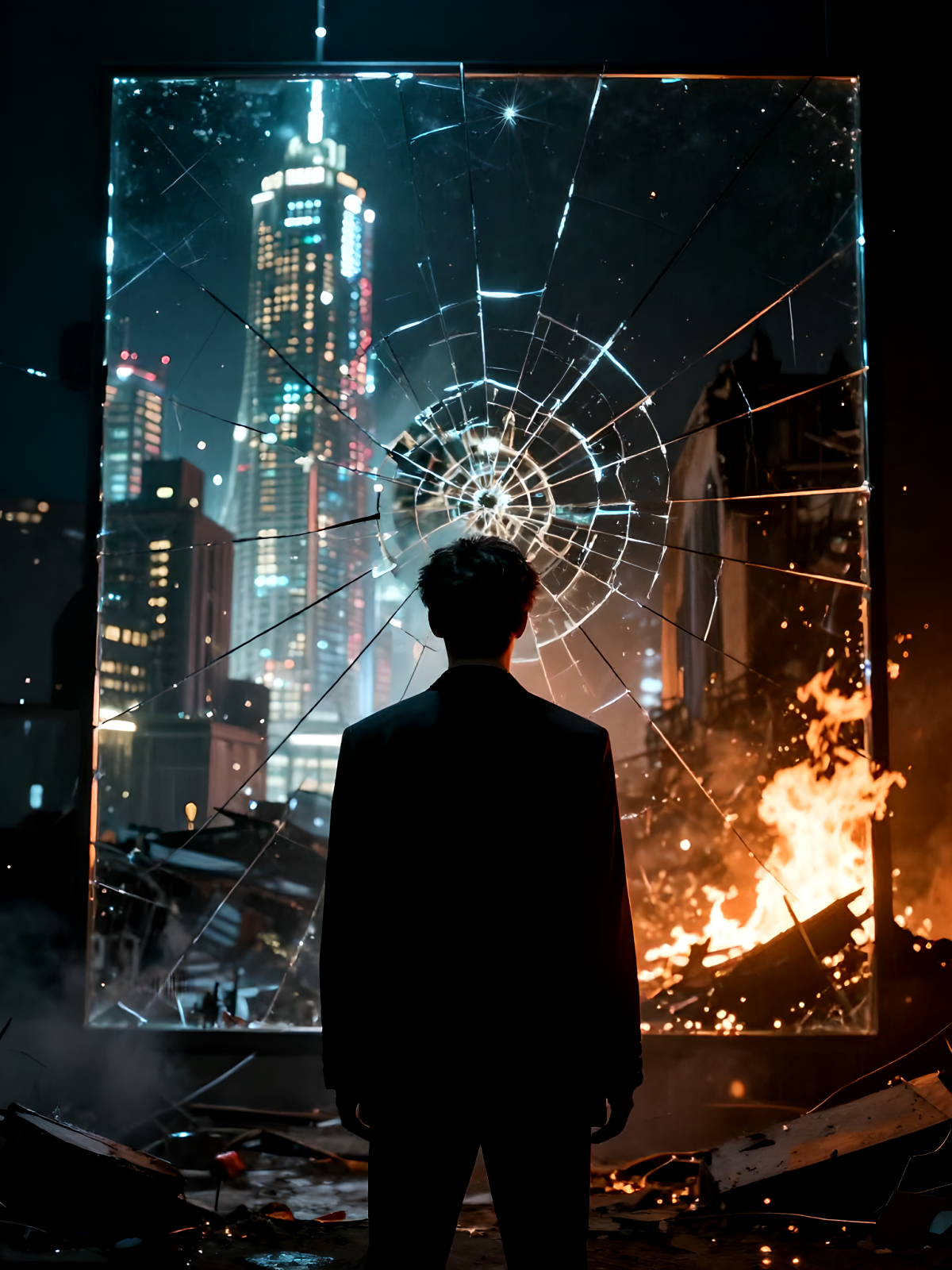
It's 2026. We have everything. And it's still not enough.
A reflection on the paradoxes of a humanity capable of reaching the stars yet incapable of queuing in peace.
It's 2026.
We produce enough food to feed 12 billion people, and there are only 8 of us. We're preparing to return to the Moon and plan a colony on Mars. We have clean energy, medicines that extend life, vaccines that have wiped out diseases that have ravaged humanity for centuries. Every person on this planet has a device in their pocket that provides access to all human knowledge ever produced.
We have everything we need to live well. All of us.
But no.
In 2026, as I write this piece, dozens of armed conflicts are active around the world. Ukraine and Russia are in their fifth year of war. Gaza, Sudan, Myanmar, Yemen. Now Iran, and potentially the entire Middle East. According to ACLED, in 2025, over 204,000 events of political violence, with more than 2,240,000 victims. One in six people worldwide has been directly exposed to violence.
These numbers should shock. But, honestly, we've almost gotten used to them.
The grey eminences? Look in the mirror.
There is a question that hangs over all of this: who's behind it? Who are the eminences grise holding the world in check? The powerful, the bankers, the corrupt politicians, the arms lobbies?
They exist, of course. And they have their enormous faults.
But I stopped looking for the hidden Great Puppet Master the day I found myself cursing a stranger who had “stolen” a parking space from me.
Because in that moment—in that split second of visceral rage, of sense of oppression, of desire for revenge—I recognized something familiar. Something ancient. The same mechanism that drives armed conflicts, only on a smaller scale. The same logic: What is mine is mine, what is yours can become mine, and whoever opposes it is an enemy.
The banal evil of everyday things
Hannah Arendhe was talking about "“banality of evil” to describe how historical horror is born not from monsters, but from ordinary people who stop thinking.
I add a contemporary variant: evil is also in its noisy and rude everyday life.
It's in the driver who cuts you off and looks at you defiantly, convinced the world owes him something. It's in the co-worker who blames others for his mistakes. It's in the person at the supermarket who parks their cart in the middle of the aisle and then looks at you as if you were the problem. It's in the tourist who throws away trash on the beach, in the arrogance of the person who shouts on the phone on the train, in the indifference of the person who cuts in line as if the rules apply to everyone else.
Little things? Sure.
But I am the same fiber that conflicts are made of. Only there, with enough territory, enough resources to compete for, and someone charismatic enough to fan the flames, those small fibers become armies.
Technological progress does not update human software
The point is this: technology advances exponentially. Our psychology doesn't.
Between 2020 and 2026, we built artificial intelligences capable of writing novels, composing music, and diagnosing cancer. But our limbic brain—the one that manages fear, territoriality, hierarchy, and aggression—has remained essentially identical to that of Homo sapiens 50,000 years ago.
Artificial intelligence has given us unimaginable tools. But it hasn't given us collective wisdom. Not yet. Maybe never, unless we do our part.
We have democratized access to information. But we have not defeated ignorance. choice —that of those who can know, could understand, but prefer not to do so because it makes them uncomfortable, because it changes the coordinates of the known world, because it forces them to deal with something other than themselves.
So what?
There are no easy solutions. I distrust those who have them.
But I think the right question is not “who keeps us at war?”, but “What keeps us at war?”
And the most uncomfortable answer—the one that hurts the most precisely because it's true—is that we are too. In our little daily wars. In our invisible boundaries drawn around the ego. In our inability to leave space, to yield, to accept that someone might have a different worldview than ours without it being an existential threat.
Great wars are fought with weapons. Our daily wars are fought with our gaze, with our horn, with a thoughtlessly written online comment.
And they are made of the same material.
As long as we wage our own little wars every day, we can stop wondering why the world can't find peace.
We are the world. For better or, unfortunately, for worse.

Digital creative, musician, and storyteller. I explore the intersection of humanity and technology, telling stories of AI, music, and real life. Welcome to my organized mess.”




One Comment
Comments are closed.