Men of yesteryear: nostalgia for what, exactly?
I was listening to a popular podcast, one of those well-made ones: smart people, pace, observations that occasionally make you stop while you're doing something else.
At one point, one of the hosts – a person I respect for her intelligence and acumen – said a phrase as old as my grandmother's cream-colored refrigerator:
«"There are no more men like there used to be."»
And I smiled.
Not with superiority. With the kind of smile that comes when a sentence, even uttered by a brilliant person, inadvertently opens a door to a cellar full of heavy furniture, yellowing photographs, and ideas we hoped we'd left behind.
Then, as often happens to me, the smile finished its work and gave way to the question.
What men of the past?
Those who made decisions for the whole family? Those for whom the wife was a necessary presence, an appliance with optional opinionsThose who held the money, the steering wheel, the remote control, and the final say, often even when they didn't even have the first say?
Why nostalgia is a stylist. He takes your past, dresses it in a tweed jacket, a mechanical watch, and a low voice. Then he carefully avoids the camera when he's screaming in the kitchen.
Selective nostalgia
When a woman - or a man, because the repertoire is democratically distributed - says she wants “an old-fashioned man”, is hardly calling for the restoration of the 1942 civil code.
No one, I hope, really dreams of a husband dictating where his wife can live, who she can date, and how she should behave. No one wakes up in the morning thinking: «"How wonderful it would be to go back to when female infidelity was a crime punishable by stoning, and male infidelity only became a problem if the neighbors started gossiping too loudly."»
Yet that story is much less remote than we like to tell ourselves. In some countries, it's still a reality.
In Italy, the legal model of the hierarchical family has been replaced by an equal one with the family law reform of 1975; crimes of honor and reparatory marriage were abolished in 1981. Nearby dates. Annoyingly close.
I was already born. Many readers of this article were too. Some had surely already started wondering where the car keys had gone.
This doesn't mean that every man of yesterday was a despot in a vest, smoking a cigarette and banging his spoon on the table like a medieval judge. People are always more complex than their social roles.
There have been loving, kind men, capable of enormous sacrifices. Fathers who worked themselves to the bone to give their children a chance. Husbands who were silent out of modesty, faithful out of conviction, present in their own way.
The problem arises when we exchange some individual virtues for the goodness of an entire system.
A man could be excellent while living within a profoundly unjust model. Even a great musician can play in a room with the acoustics of a garage.
The talent remains. The reverberation too.
What are we really regretting?
Here comes the interesting point.
Maybe the sentence “there are no more men like there once were” it's not really about the men of the past.
Talk about what is missing today.
It's about the desire to meet someone who keeps their word without treating it like an Instagram story: visible for twenty-four hours, then mysteriously evaporating. It's about someone who isn't afraid to choose, to declare themselves, to be consistent. Someone who has a backbone even when they don't have to show it on LinkedIn.
This nostalgia, after all, is understandable.
We are immersed in an era that calls “"freedom"” Even the chronic inability to take responsibility. People who disappear after three months of messages, two dinners, and an inordinate amount of heart-hands emojis. Men who interpret ambiguity as an evolved form of charm. People who confuse being emotionally unavailable with having depth.
Spoiler: Often they're just scared.
So yes, maybe something is missing. There's a lack of reliability. There's a lack of emotional courage. The ability to say is missing “"There are"”, which is a small sentence yet requires enormous stature. It lacks the sense of care, that little practice glamorous to remember an important date, to do your part at home, to really listen, to stick around when life stops feeling like the trailer for a well-written series.
Only these qualities do not belong to the men of the past.
They belong to adults.
And adults, like well-done guitar solos, have never been so rare.
The Museum of Lost Virility
The man “old-fashioned” He is often imagined like this: strong, protective, decisive, capable of fixing a faucet and taking control of a situation.
Good. All decent features.
But then we have to be completely honest: the original catalogue also contained the man who never cried, except to explode like a faulty boiler; the one who couldn't say “"I love you"” but he knew perfectly well how to say it “Don't you dare contradict me while you live under this roof”; who considered childcare a feminine activity, like the washing machine or basil on the balcony.
The “strong” man of the past, too often, was a man forced not to hear. Or rather: to feel only the emotions authorized by the unwritten rules of the Italian male.
- Anger? Granted.
- Jealousy? Almost celebrated.
- Wish? Obviously.
- Tenderness? Alone with the dog, possibly when no one is looking.
- Fear? Never spoken.
- Sadness? A French word, probably.
Traditional masculinity has also harmed men. It has taught millions of men that asking for help was a defeat, that talking about their limitations was a chink in the armor, that control was a proof of love.
And control, when it grows undisturbed, it becomes a cage. For those who suffer it. Also for those who build it.
When nostalgia becomes dangerous
I don't want to fall into a preachy tone, because sermons are that elegant way of not making people turn the page.
But certain facts remain there, with the kindness of a brick on the table.
Istat data indicate that in 2024 in Italy there were recorded 327 murders, of which 116 with female victims. Enormous numbers. Numbers that risk becoming mere decoration, because by hearing them so much we end up walking past them without really looking at them.
This is why words matter. And not because a nostalgic phrase automatically transforms anyone who utters it into a supporter of the patriarchy with a plastic card and a ministerial stamp. That would be grotesque.
Words matter because they indicate an imaginary. And within that imagination, at times, the idea survives that a valid man must be dominant, jealous, and possessive.
No.
- A man who checks your phone is not protective. He is invasive.
- A man who decides for both is not resolute. He is arrogant.
- A man who isolates you from the people you love is not in love. narrowing your world to become the only available panorama.
- A man who uses fear to gain obedience is not “of another generation.”. It's a problem.
Words also serve this purpose: to remove the romantic patina from things that have never been romantic.
The true “old-fashioned” man”
Maybe we can salvage something, though.
We can save the idea of a person who he shows up when he says he will come. A person who knows how to do things, who learns, who protects without suffocating. Someone who bears the weight of their responsibilities without turning them into a medal to show off at the dinner table.
We can maintain attention to detail. Respect. Modesty that doesn't turn into punitive silence. The ability to court someone without reducing courtship to a strategy of marketing with call to action final.
We can miss the men who knew how to fix something.
As long as we clarify one fundamental thing: today a man should know fix himself too.
One's own fears. One's automatisms. One's relationship with anger. The childish belief that loving someone means possessing them. The terror of appearing vulnerable. That annoying cultural residue where a washed dish or a child taken to the pediatrician suddenly become "“a helping hand”.
A hand given? To whom? To one's own family?
How generous! A round of applause, a monument, and maybe a commemorative stamp.
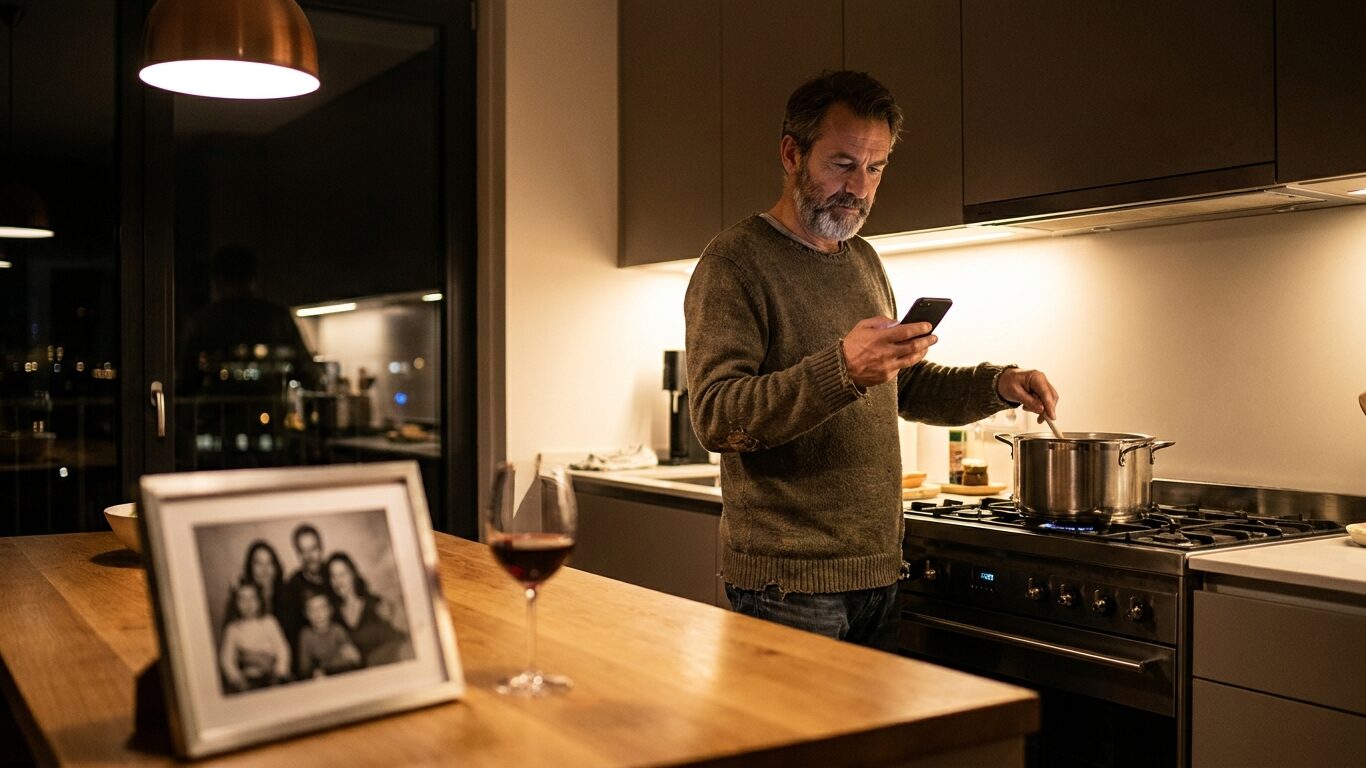
An unphotogenic evolution
The man I'm interested in is not the same as he used to be.
It's the one now, when he decides to grow up.
The one who knows how to be reliable without being the head of the household. The one who knows how to be strong without being fearful. The one who desires without demanding. The one who protects the freedom of the person he loves, even when that freedom guarantees him nothing.
The one who knows how to cook, listen, work, apologize, change his mind, take out the trash, and hold an emotional conversation without looking for the fire exit.
Does he look like a superhero?
No.
He seems like a complete person.
And perhaps this is where the sentence needs to be rewritten.
We don't need men from the past. We need men who have learned something from all the times before.

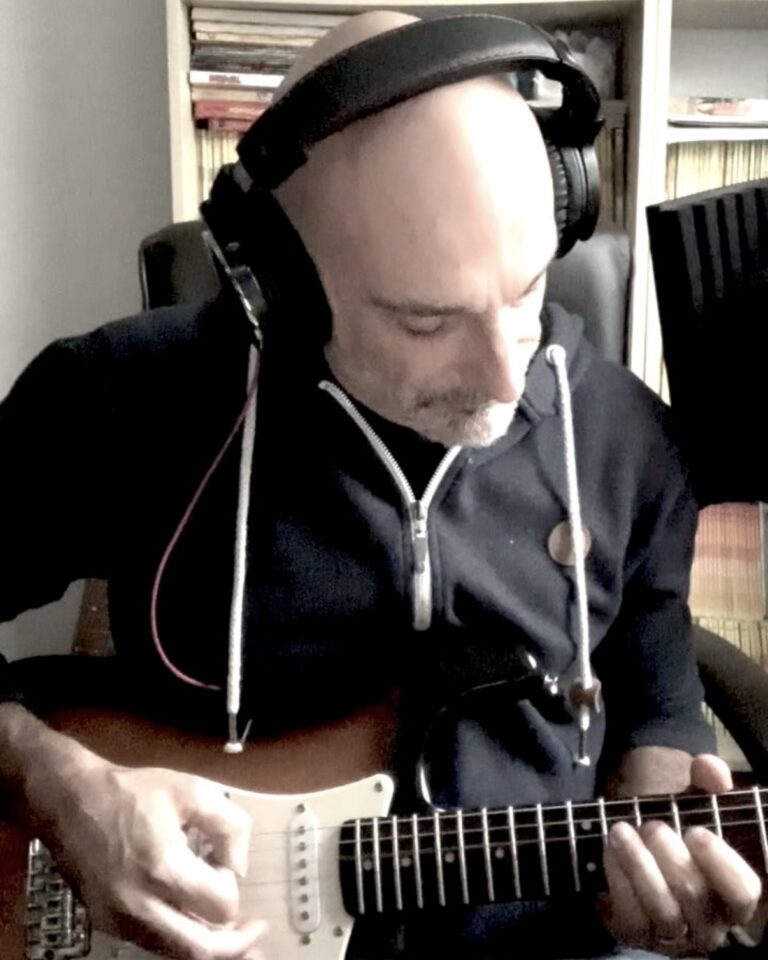
Digital creative, musician, and storyteller. I explore the intersection of humanity and technology, telling stories of AI, music, and real life. Welcome to my organized mess.”